Last Updated: November 1, 2026
Quick Summary
Household cleaners are generally not safe for car interiors. Their formulas are designed for hard, sealed kitchen surfaces, while car cabins contain softer, porous leather, fabric and plastic that react badly to harsh chemicals. Repeated use can dry out leather, cloud plastic trim and leave residue that attracts dirt.
- Harsh cleaners strip natural oils from leather, causing fading and fine cracking over time.
- Residue from household products can soak into fabric and carpet, leaving rings or a musty smell.
- Always test any new product on a hidden area and wait for it to dry before going further.
- Wipe away residue with a clean, damp cloth and ventilate the cabin if a household cleaner was used.
- Use an automotive interior cleaner on leather, fabric, plastic trim and dashboards instead.
Table of Contents
Many drivers reach for the kitchen cupboard when a car interior looks grubby. A spray bottle of all-purpose cleaner or a bottle of washing-up liquid seems harmless enough. Yet the risks of using household cleaners on car interiors are real, and they often show up weeks later as a faded seat or a sticky dashboard.
A car cabin is a small, enclosed space full of mixed materials. Leather, fabric, vinyl, plastic trim and protective coatings all react differently to chemicals. A product that is gentle on a kitchen worktop can strip the finish from a seat or leave a whitish film on a dashboard.
Household products are formulated for hard, sealed surfaces. Car interiors are softer, porous and often treated with protective layers. That mismatch is the core problem.
- Strong alkaline cleaners can dry out leather
- Solvents can soften or cloud plastic trim
- Residue can attract dust and dirt
- Heat from sunlight can make chemical damage worse
Watch out: a cleaner that smells strong is not always the most aggressive, and a mild-smelling product can still strip a protective coating over repeated use.
Best for: drivers who want a quick clean and have a plain, sealed surface. Skip if: your seats are leather, suede or treated upholstery.
Surface-by-Surface Risks: Leather, Upholstery and Fabric
Leather is the most vulnerable surface in most cars. Harsh cleaners remove the natural oils and topcoat, which leads to fading and fine cracking over time. Upholstered seats and carpets face a different threat, because cleaner residue can wick deep into the fibres and set as a stain.
Leather seats and what drying cleaners do
Drying cleaners strip oils from leather faster than most drivers expect. Once the surface dries out, it loses its flexibility and begins to crack at stress points such as the bolsters. A dull patch that appears after cleaning is often the first sign of this damage.
Fabric, carpets and stains that set
Fabric holds onto whatever you spray on it. Residue from a household product can leave a ring or tide mark once it dries. Carpets are worse because cleaner can soak down into the underlay and cause a musty smell. Blot any spill straight away, and avoid heavy saturation.
Can You Use All-Purpose Cleaner on a Car Interior?
Generally, all-purpose cleaner is not recommended for car interiors. Its formula is designed for many hard surfaces, not for leather, fabric and plastic trim together. Many drivers find that a dilute, pH-neutral product made for automotive use is a safer choice for most surfaces.
If you do use an all-purpose product in an emergency, test it first on a hidden area such as the underside of a seat flap. Wait for it to dry, then check for colour change, tackiness or a dull finish before going further.
How to Clean a Car Dashboard Without Damaging It
Dashboards are usually made from plastics and vinyl that can fade, crack or go sticky under the wrong product. Start by vacuuming loose dust, then use a soft microfibre cloth lightly dampened with a product made for dashboards. Wipe in one direction and avoid spraying directly onto the surface. Once cleaning is done, learn how to fix car dashboard scratches step by step.
If you have already damaged the surface, a professional repair can often restore the finish.
Cleaner-by-Cleaner Compatibility Guide
Use this quick guide to decide what to use on each surface. Always test a new product on a hidden area first.
| Cleaner type | Leather | Fabric | Plastic trim | Dashboard |
|---|---|---|---|---|
| Kitchen all-purpose spray | Avoid | Use with care | Avoid | Avoid |
| Washing-up liquid | Avoid | Use diluted | Use diluted | Avoid |
| Glass cleaner | Avoid | Avoid | Avoid | Avoid |
| Automotive interior cleaner | Use | Use | Use | Use |
What to Do If a Household Cleaner Has Already Been Used
If you have already sprayed a household cleaner, act quickly. Wipe the area with a clean, damp cloth to remove residue, then allow the surface to dry naturally. Keep the windows open to ventilate the cabin. Avoid rubbing hard, because that can spread the product and worsen the mark.
Once the surface is dry, check for dullness, tackiness or discolouration. Deeper damage usually needs a professional assessment.
Ventilation matters too. Chemical vapours can build up in a closed car, so open the doors for a few minutes before driving.
Booking a Professional Interior Assessment Before the Damage Spreads
Cosmetic damage from cleaners tends to spread if it is left alone. A cracked seat bolster can split further, and a faded dashboard can become harder to match later on. TrimKings offers mobile interior repair across the West Midlands, with service provided at your home or workplace.
Send us a photo of the affected area to receive a no-obligation quote. Pricing depends on the size and type of damage, so visit the TrimKings website for current prices or a quote. This can be especially useful if your lease is ending soon and you want to avoid end-of-lease charges.
Frequently Asked Questions
Can I use all-purpose cleaner on my car interior?
Some all-purpose cleaners are suitable for hard plastics, but many are not safe for leather, fabric or screen-adjacent surfaces. Alkaline or solvent-heavy formulas can dry out leather, fade dashboard plastics and leave residue that attracts dust. Check the label for surface compatibility, dilute it as directed, test on a hidden patch first and rinse or wipe off any excess. When in doubt, use a product made specifically for automotive interiors.
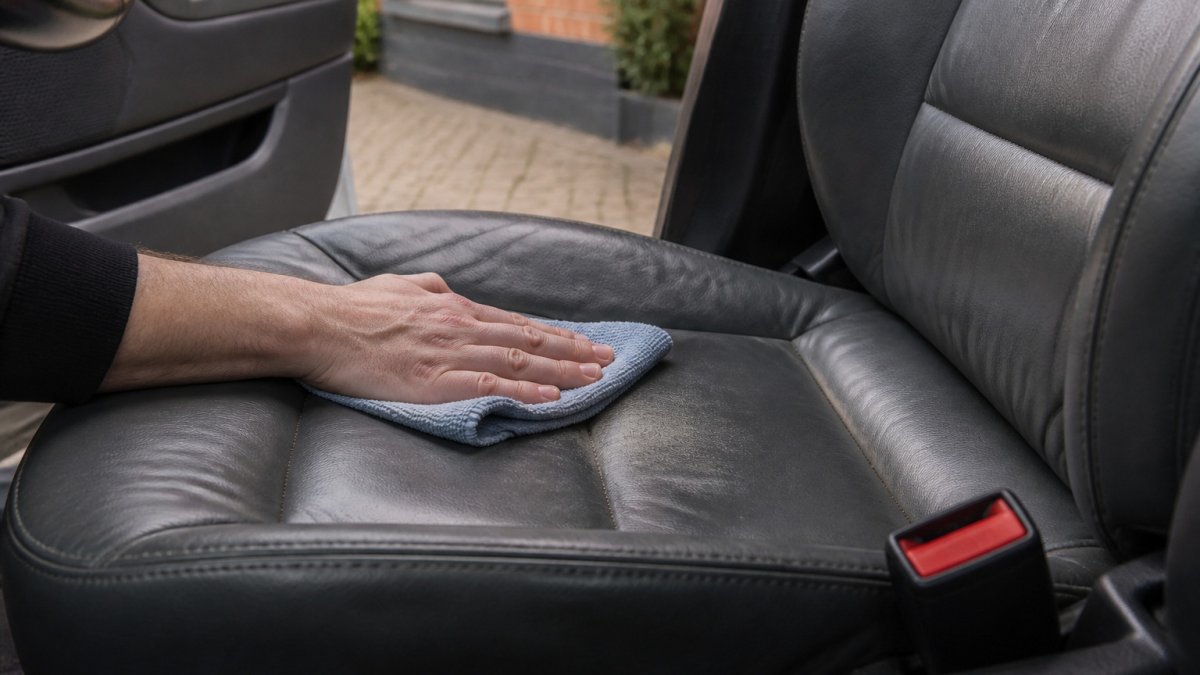
Can household cleaners damage leather car seats?
Yes. Household cleaners often contain alcohol, ammonia, bleach or strong surfactants that strip the protective topcoat from leather. Once that finish is removed, the leather can dry, crack, discolour or take on a dull, uneven appearance. Damage is often permanent without professional refinishing, so avoid spraying these products directly onto seats and never use abrasive pads.
What should I do if a household cleaner has stained my car upholstery?
Act quickly. Blot the area with a clean, dry cloth to lift liquid without spreading it, then rinse lightly with plain water and blot again. Avoid scrubbing, which can push the cleaner deeper into the fibres. Let the area air dry with the windows open. If a discoloured patch, ring or bleached area remains, a professional assessment can determine whether colour matching or refinishing will restore it.
What is safe to use on a car dashboard?
A soft microfibre cloth dampened with plain water or a dedicated interior cleaner designed for automotive plastics is the safest choice for most dashboards. Avoid glass cleaners containing ammonia, degreasers and silicone-heavy polishes, which can leave a greasy film, cause glare or cloud plastics over time. Work in small sections, wipe away any excess product and keep cleaners off the windscreen and instrument screens.