Last Updated: November 5, 2026
Quick Summary
Selling a car with interior damage works best when you repair the most visible problems, price in the rest, and disclose everything honestly. Buyers discount for damage they can see, so fixing low-cost burns and tears often recovers more value than the repair costs. Be clear about any damage you leave in your advert and photos.
- Repair small, highly visible damage such as burns and tears when the repair costs less than the likely buyer discount.
- Get a fixed-price repair quote before deciding whether to fix or disclose.
- Buyers usually discount at least the repair cost, and often more for inconvenience.
- Disclose deep tears, persistent odours and structural damage clearly, and price them in from the start.
- Take daylight photos and describe damage specifically, with location and size.
Table of Contents
- Why Interior Damage Changes How You Sell
- How to Price a Car With Interior Damage
- Car Interior Repair Before Selling: What Is Worth Fixing
- Car Interior Damage Disclosure: What You Must Tell Buyers
- How to Photograph and Describe Interior Damage Honestly
- How to Sell a Damaged Car: Choosing the Right Route
- Booking Your Interior Repair or Quote Before You List
- Frequently Asked Questions
Why Interior Damage Changes How You Sell
Sellers who fix or honestly describe their damage tend to get better offers than those who hide it. Buyers want to know what they are getting, and surprises at the viewing kill deals fast.
Damage also tends to be found quickly. A buyer who spots a burn on the driver’s seat will assume there is more they have not seen.
How to Price a Car With Interior Damage
Start with the market value of the car in good condition. Use online valuation tools and look at similar cars for sale nearby.
A common mistake is pricing the car as if the damage does not exist.
Pricing depends on the make, model, age, mileage and the type of damage. For a precise figure on your car, request a quote from TrimKings rather than guessing.
Pricing by Type and Severity of Damage
Not all damage affects price the same way. Use this rough guide to think through your options:
- Small cosmetic marks: scuffs and light wear, often easy to disguise before listing
- Stains and odours: may put buyers off even if the fabric is intact, so clean first
- Burns and tears: usually reduce the price more and are worth repairing if the cost is low
- Cracked dashboards or trim: can look expensive to fix, so buyers tend to overestimate the cost
- Structural or heavy seat damage: often worth a professional repair quote before you decide
Always weigh the cost of repair against the likely price reduction. Fixing a small burn often recovers more value than it costs.
A Practical Framework for Estimating the Discount
Most sellers guess at the discount and either over-price the car (so it sits unsold) or under-price it (so they lose money).
**1.
2. What would a buyer have to spend to put the damage right? This is the anchor for your discount.
**3.
Buyers generally expect a discount at least equal to the repair cost, and often more to reflect the inconvenience and uncertainty.
Condition-Based Examples
These examples show how the framework works in practice. They are illustrative, not quotes for your car.
- A five-year-old hatchback with two cigarette burns on the rear bench. The cost of a repair depends on the damage, so request a quote for your own car. Repairing before listing is usually the better move.
- A saloon with a cracked dashboard top. Replacement can be costly, so buyers often assume the worst and discount heavily. A professional repair or a fitted cover may recover more value than the discount a buyer would demand.
- An estate with a persistent smoke or pet odour. Cleaning may not fully remove it, and buyers fear the smell will return. Expect a noticeable discount unless you can show a professional odour treatment has worked.
- A car with a torn driver’s seat bolster. This is highly visible and suggests heavy use. A repair quote is worth getting before you decide whether to fix or disclose and discount.
Watch out: do not simply subtract the cheapest online repair price you can find. Buyers discount for their own time, risk and inconvenience, not just the parts and labour.
Once you have a figure, compare it with the cost of a repair quote. If the repair is cheaper than the discount a buyer would demand, fix it. If not, disclose the damage clearly and price it in from the start.
Car Interior Repair Before Selling: What Is Worth Fixing
Repair the damage that buyers notice first. These are usually the seats, steering wheel, carpets and dashboard, since they are in view from the moment the door opens.
Focus on quick, low-cost wins that make the car look cared for. A clean, tidy interior with a repaired burn often sells better than a spotless car with a visible tear.
Do not spend heavily on repairs that will not add much to the sale price. Compare the repair cost with the likely increase in offers before booking any work.
The Repair-or-Disclose Decision
The question is not whether the damage bothers you. It is whether fixing it recovers more than it costs. Work through this sequence for each item of damage.
- Get a repair quote. A mobile interior repair specialist can usually quote from a photo. Ask for a fixed price, not an estimate.
- Estimate the buyer’s discount if left unrepaired. Use the pricing framework above. As a rule of thumb, the discount will be at least the repair cost and often more.
- Compare the two. If the repair is cheaper than the likely discount, fix it. If it is more expensive, disclose the damage and price it in.
- Consider the time cost. A longer repair may delay your sale. A mobile repair done at home or your workplace avoids taking the car to a garage.
Most sellers find that small, highly visible damage, a burn, a tear, a worn patch on a seat bolster, is worth repairing because the cost is low and the discount a buyer would demand is high. Large or structural damage is often better disclosed and priced in, because the repair cost may exceed the discount.
What to Fix and What to Leave
- Worth fixing: small burns, tears under a few centimetres, worn seat bolsters, scuffed trim, light stains that respond to cleaning, and minor odours that a treatment can remove.
- Often worth fixing: cracked dashboard tops where a repair or fitted cover is cheaper than the discount a buyer would demand.
- Usually disclose and price in: deep tears, damaged seat frames, widespread staining that will not lift, persistent smoke or pet odours, and damage to rare or expensive trim where a colour match is difficult.
- Get a quote before deciding: leather seat damage where colour matching matters, and any damage that affects how the car drives or feels.
Safe DIY Cleaning and Repair Steps
Many minor jobs can be done at home. Work carefully and test any product on a hidden area first.
- Vacuum thoroughly, including under the seats and in the boot
- Clean fabric with an upholstery cleaner suited to the material
- Use a leather conditioner on leather seats to reduce cracking
- Apply a fabric adhesive patch to small burns, matching the fibre and colour where possible
- Avoid strong solvents on plastic or vinyl, which can cause discolouration, and check the right techniques and materials for vinyl and plastic dashboards before attempting a crack or scratch repair.
Stop and call a professional if the damage is large, deep, or on a leather seat where colour matching matters. Poor DIY repairs can make the damage more obvious.
Watch out: home repairs can go wrong in ways that cost more to put right than the original damage.
When to Call a Professional
Some jobs are best left to a specialist: leather recolouring, deep tear repairs, odour treatments that need an ozone or enzyme process, and any repair where the material is unusual or the colour match is difficult. A professional repair can also give you something to show a buyer, which may support your asking price.
The table below summarises which repairs are usually worth doing before a sale and which are better disclosed and priced in.
| Damage | Recommended action | Note |
|---|---|---|
| Small burns | Repair | Often recovers more value than it costs |
| Cracked dashboard top | Repair or fitted cover | Cheaper than the discount a buyer would demand |
| Deep tears | Disclose and price in | Repair cost may exceed the discount |
| Persistent smoke or pet odour | Disclose and price in | Buyers fear the smell will return |
| Leather seat damage | Get a quote first | Colour matching matters |
| Light stains | Clean | Respond well to cleaning |
Car Interior Damage Disclosure: What You Must Tell Buyers
Be honest about all interior damage. Stating it clearly in your advert and at viewings protects you from later disputes and builds buyer confidence.
Hiding damage can cause real problems after the sale, including complaints and claims for misrepresentation. Written disclosure gives you a clear record of what you told the buyer.
Note the damage in your advert, including its location and size. Buyers appreciate sellers who describe problems plainly rather than leaving them for a surprise at the viewing.
How to Photograph and Describe Interior Damage Honestly
Take clear photos in daylight. Show each damaged area up close and include a wider shot so the buyer can see where it sits in the car.
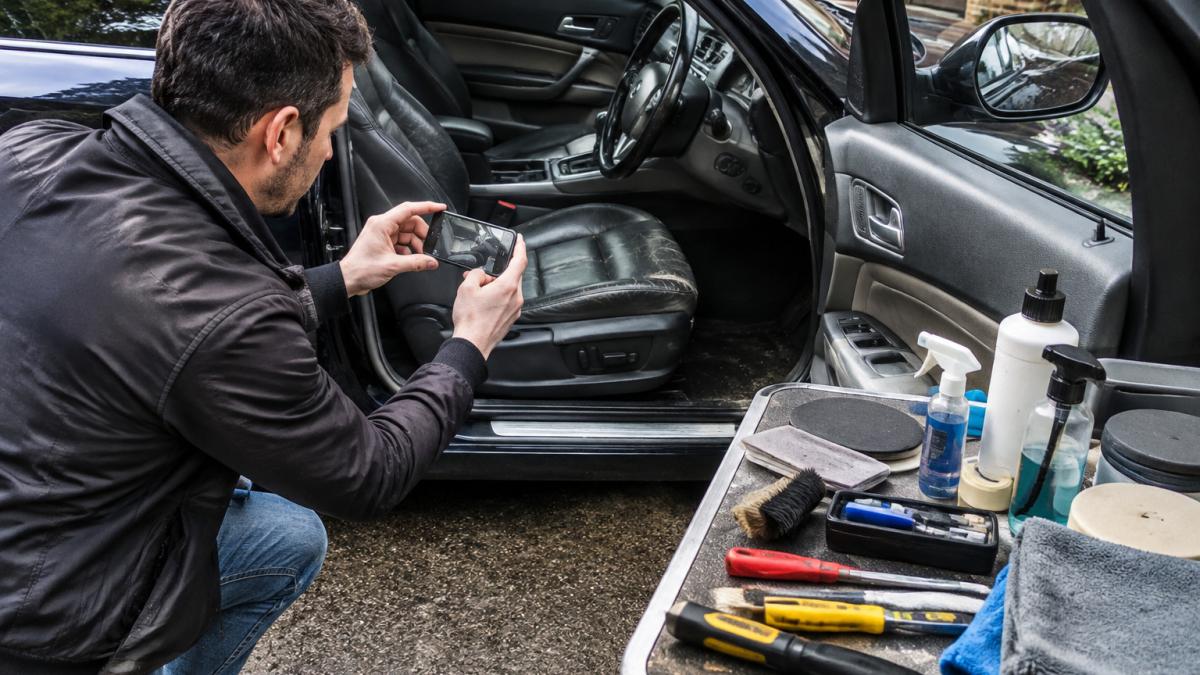
In your description, state the damage in plain terms. Say “two small cigarette burns on the rear seat, about 1 cm each” rather than “minor wear”.
How to Sell a Damaged Car: Choosing the Right Route
You have several options. A private sale usually gets the highest price, but it takes more time and buyers will negotiate hard on damage.
Car-buying services can be a fast route if you want to sell without listing the car yourself. Compare the offers from each route against the cost of any repairs you have done.
If the damage is significant, a private buyer who is comfortable with cars needing work may be your best match.
Booking Your Interior Repair or Quote Before You List
If you are unsure what the damage will cost to fix, get a quote before you list the car. TrimKings offers mobile repairs at your home or workplace across the West Midlands. Send us a photo of the damage to request a no-obligation quote.
Repairs that take place before listing can help your advert look more appealing. Once the work is done, update your photos and description to show the improved condition.
Request a quote from TrimKings to find out what is worth fixing before you sell.
Frequently Asked Questions
Can you sell a car with interior damage?
Yes. You can sell a car with interior damage privately, to a dealer, or through a car-buying service. The damage does not stop the sale, but it does affect the price and the pool of buyers. Be honest in your advert and disclose known defects, such as tears, stains or cigarette burns. Buyers who see the damage in person and find it matches your description are far more likely to proceed, and you avoid disputes after the sale.
Should you repair interior damage before selling a car?
It depends on the cost of the repair compared with the price reduction a buyer would ask for. Cosmetic issues such as small scuffs or a minor cigarette burn are often worth repairing if the cost is low. Large tears or heavily stained upholstery may cost more to fix than they add to the price. Get a quote for a professional repair and compare it with the discount you would otherwise need to offer. TrimKings offers quotes based on a photo of the damage, so you can make that comparison before you decide.
How much does interior damage reduce a car’s value?
The reduction depends on the type, size and location of the damage, as well as the make and age of the car. Visible damage on seats or the dashboard usually has more impact than damage in less noticeable areas. Pricing depends on many factors, so the most reliable approach is to compare your car against similar listings in your area and ask a repair specialist for a quote on the cost to fix the damage.
Is it worth repairing cigarette burns in a car seat before selling?
Often, yes. Cigarette burns are one of the most noticeable interior faults and can make a buyer assume the rest of the car has been neglected. A targeted repair can reduce the issue on the buyer’s list of concerns. Ask for a quote first, and compare the cost with the likely discount a buyer would request. A careful colour match is worth requesting when you ask for a quote.