Last Updated: November 7, 2026
Quick Summary
Car interior trimmers are specialists who repair, recover and restore a vehicle’s upholstery, trim panels and headlining, sitting between simple cleaning and full factory-standard replacement. Their work covers seat covers, door cards, consoles, steering wheel wraps, carpets and headlining, typically handled through a mobile visit at your home or workplace.
- Repair suits damage confined to one area, while retrimming suits wear spread across the surface.
- Single burn or tear repairs on one seat typically cost £60-£150, per the article’s indicative ranges.
- Full interior retrim in leather for a typical five-seat car is indicated at £1,800-£4,500.
- Safety-critical parts like airbags and seat-belt anchorages should stay with a qualified technician.
- Send a clear photo of the damage and the car’s make and model to request a no-obligation quote.
Table of Contents
- What Car Interior Trimmers Do and Where Their Work Ends
- Repair Versus Retrim: How to Decide What Your Interior Needs
- Car Seat Repair: Tears, Burns and Worn Bolsters
- Car Upholstery Repair and Headlining Repair Explained
- Typical Costs and What Affects the Price
- Choosing Materials and Comparing Their Trade-Offs
- Mobile Car Interior Repair: What to Expect From an On-Site Visit
- Booking Your Trim Repair: Send a Photo and Request a Quote
- Frequently Asked Questions
Car interior damage rarely announces itself. A cigarette burn on the rear bench, a split along a bolster, or a headlining that has started to sag can quietly knock hundreds of pounds off what a car is worth when it is time to sell or hand it back at the end of a lease. TrimKings provides mobile car interior repair across the West Midlands, so this guide covers what car interior trimmers do, what repair and retrim work involves, what it typically costs, and how to choose the right specialist for your vehicle.
Car interior trimmers are specialists who repair, recover and restore a vehicle’s upholstery, trim panels and headlining. Their work sits between simple cleaning and a full factory-standard replacement, and understanding where that boundary lies is the first step to getting the right result.
What Car Interior Trimmers Do and Where Their Work Ends
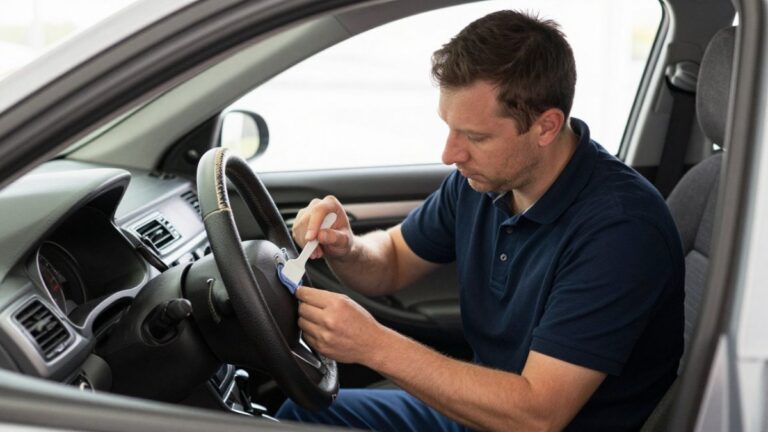
A car interior trimmer works on the soft surfaces inside a vehicle. That usually means seat covers, door cards, centre consoles, steering wheel wraps, carpets and the headlining. At TrimKings we handle the repair end of that spectrum: fixing tears, burns and scuffs, refinishing leather, and matching colour so a repaired area blends into the original trim.
Trimming work has limits. A trimmer can rebuild a bolster or re-stitch a seam, but if the seat foam is collapsed or the frame is broken, the underlying structure needs attention first. Similarly, a headlining that has detached because the adhesive has failed may need re-bonding rather than a cosmetic patch. Knowing where the work ends stops you paying for a repair that will not hold.
For most owners, the realistic scope is cosmetic and surface-level damage. Anything involving airbags, seat-belt anchorages or structural seat frames should stay with a qualified technician who understands the safety implications.
Repair Versus Retrim: How to Decide What Your Interior Needs
The choice between repairing and retrimming comes down to how much of the surface is damaged and how the rest of the interior looks. A step-by-step guide to repairing car upholstery at home shows how much of this work is realistic to do yourself before paying a professional.
A simple test helps. If you could cover the damage with a hand, repair is likely to suit it. If the damage runs across several panels or the existing colour no longer matches anything else in the car, retrimming becomes the more consistent option.
Watch out: a poorly matched repair can look worse than the original damage. If the colour, grain or sheen will not blend, a full panel retrim often produces a result that holds its value better.
Car Seat Repair: Tears, Burns and Worn Bolsters
Seats take the most punishment, so they are where most repair work is concentrated. Tears along seams, burns from cigarettes or dropped items, and worn bolsters on the driver’s side are the three most common problems. Each needs a different approach.
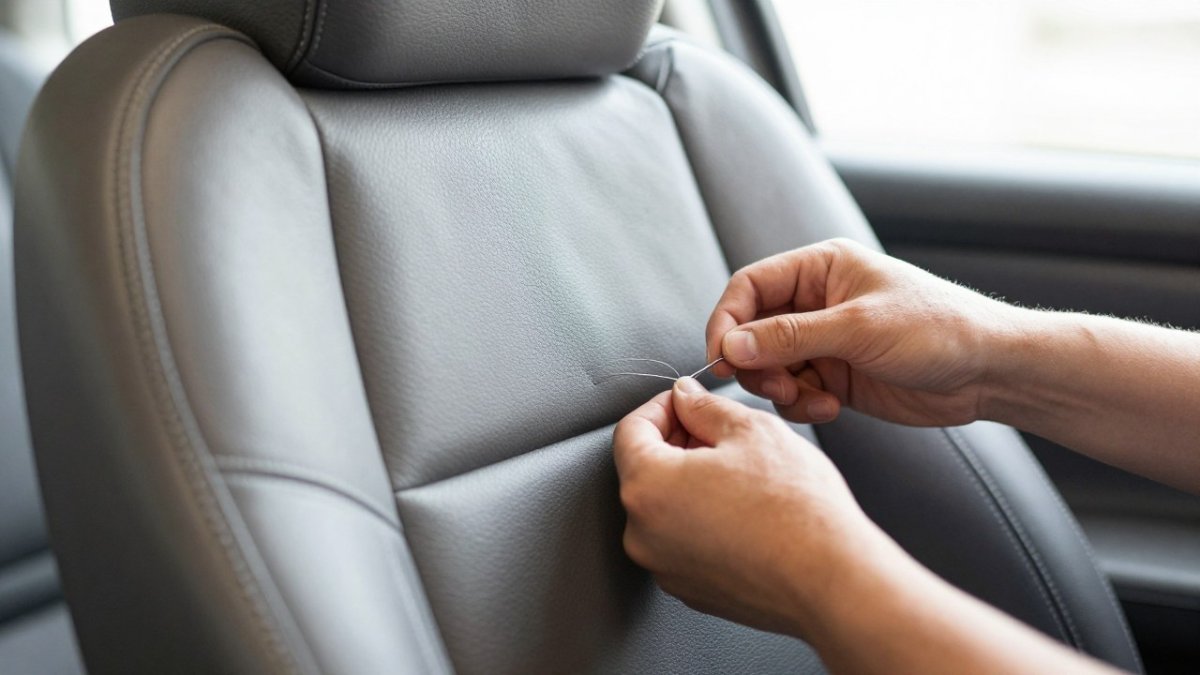
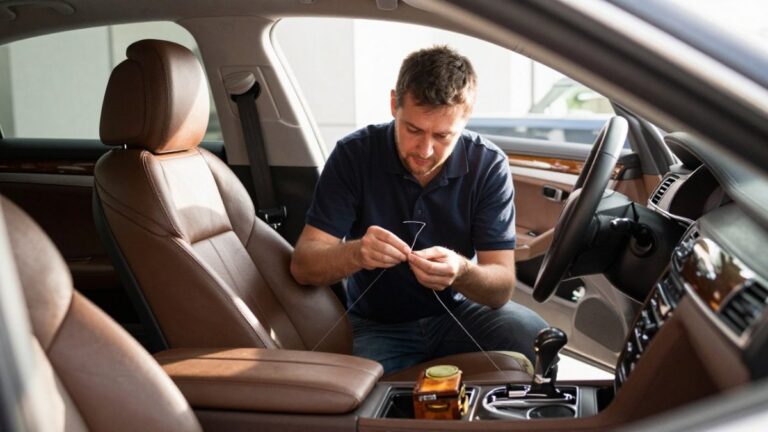
Tears are usually repaired by re-stitching with a matching thread and, where needed, a fabric or leather adhesive patch underneath. Burns are more involved: the charred material is trimmed away, the hole is filled and the surface is re-grained or re-coloured so the repair disappears under normal light. Our guide to fixing cigarette burns in car seats covers the fabric adhesive, fibre matching and colour blending methods step by step. Worn bolsters often need the surface refinished and sometimes the foam beneath reshaped.
The main factors affecting seat repair are the size of the damage, the material and how many seats are involved.
Leather Seat Repair and Colour Matching
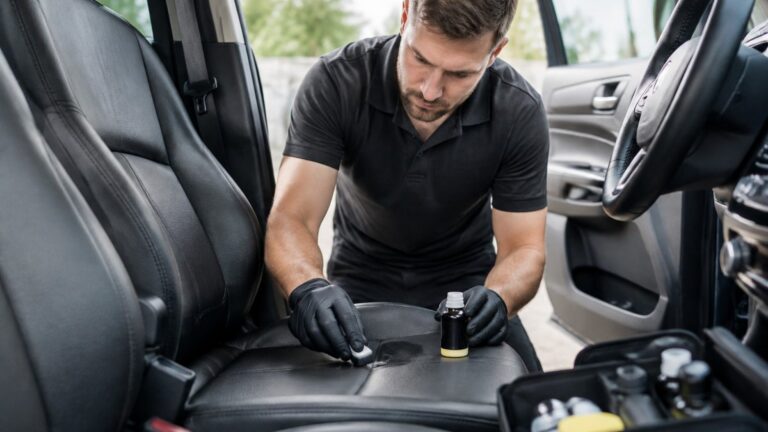
Leather repair depends almost entirely on colour matching. Leather fades unevenly, so a fresh colour applied to an old surface rarely looks right on its own.
Good matching is what helps a repair blend in with the surrounding trim.
Car Upholstery Repair and Headlining Repair Explained
Upholstery covers the fabric and leather surfaces across the whole cabin, while the headlining is the fabric lining on the roof. Both are repaired by similar principles, but the headlining presents its own challenges because it is held up by adhesive and cannot easily be removed.
Upholstery repair is generally straightforward when the damage is localised. Cloth seats can be patched invisibly if the weave is matched, and vinyl or leather can be refinished as described above. Where the material is worn through, a panel may need replacing rather than patching.
Headlining Repair Without Full Replacement
Many owners assume a sagging headlining means the whole roof lining must be removed and replaced. That is not always the case. If the lining has come away only at the edges or in one area, it can often be re-bonded with a suitable adhesive and held in place while it cures. A full replacement becomes necessary when the board itself has crumbled or the fabric is stained through.
Headlining repair is one of the areas where the trimmer’s experience matters most, because removing and refitting the lining without tearing it or leaving adhesive marks takes care.
Typical Costs and What Affects the Price
Pricing is the first thing most owners want to know, and it is where most trimmer pages go quiet. The figures below are indicative ranges for common jobs, given as clearly qualified guides rather than fixed prices. Actual quotes vary with the vehicle, the material, the extent of the damage and access, so treat them as a budgeting tool and confirm the figure in writing before work starts.
| Job | Typical indicative range |
|---|---|
| Single burn or tear repair (one seat) | £60-£150 |
| Scuff or colour restoration on one panel | £50-£120 |
| Worn bolster rebuild and refinish (one seat) | £120-£250 |
| Full seat retrim in leather (one seat) | £350-£800 |
| Full interior retrim in leather (typical five-seat car) | £1,800-£4,500 |
| Headlining re-bond (partial) | £80-£180 |
| Headlining replacement (full) | £250-£600 |
| Door card retrim (per card) | £80-£200 |
| Steering wheel retrim | £150-£350 |
Typical indicative range
The main cost drivers are:
- Size and number of repairs. A single small burn costs far less than repairs across several seats. Multiple panels are usually priced with a small economy of scale, but the total still rises with area.
- Material. Genuine leather generally costs more to repair than cloth or vinyl, because colour matching and finishing take longer. Full leather retrims are the single biggest cost item in most interior projects.
- Colour matching complexity. Faded or two-tone interiors need more time than a uniform colour, and matching an aged finish can add hours.
- Structural work. Foam rebuilds, frame repairs and headlining re-bonding add to the job and are often quoted separately.
- Access and location. Mobile work at your home or workplace removes the cost of transporting the car, but very difficult access can affect the time required.
- Removal and refitting. Seats and door cards usually have to come out for a retrim, and labour for removal and refitting is a real part of the bill.
Pricing depends on the vehicle, the material and the extent of the damage, so request a quote from TrimKings for current prices before committing to new components.
Watch out: a quote that is dramatically cheaper than others you receive can mean a patch rather than a proper repair, or a material that will not match. Ask what is included, preparation, colour matching, topcoat and any warranty, before comparing prices like for like.
Choosing Materials and Comparing Their Trade-Offs
The material you choose for a repair or retrim affects durability, appearance, comfort and cost, and the right answer depends on how the car is used.
| Material | Durability | Maintenance | Comfort | Relative cost | Best suited to |
|---|---|---|---|---|---|
| Genuine leather | High when maintained; can crack if neglected | Needs periodic cleaning and conditioning | Premium feel; warms and cools with the cabin | Highest | High-end, classic and long-kept cars |
| Vinyl (synthetic leather) | Good; can split in cold weather if low grade | Wipe clean, very low effort | Firmer than leather | Moderate | Family cars, fleet and commercial vehicles |
| Cloth | Moderate; shows wear and staining sooner | Harder to clean deeply | Breathable and comfortable | Lowest | Budget repairs and everyday cars |
| Alcantara and microfibre | Good abrasion resistance | Harder to clean; marks readily | Soft, sporty grip | High | Performance and premium interiors |
A few practical points sit behind the table. Leather ages well when maintained but is more expensive to repair and can crack if neglected, so it rewards owners who will look after it.
For a daily-driven family car, a durable and easy-to-clean option usually makes the most sense, and vinyl or a good cloth often wins on value.
Matching also matters at panel level. A repair only looks invisible if the grain, sheen and colour match the surrounding trim, so a trimmer may recommend repairing a whole panel rather than a small patch when the original material has faded.
Watch out: choosing a cheaper material that does not match the rest of the interior can make a repair more obvious than the damage it replaced.
Mobile Car Interior Repair: What to Expect From an On-Site Visit
A mobile visit means the trimmer comes to your home or workplace rather than you taking the car to a workshop. For commuters and busy professionals, this helps minimise disruption to their schedule.
On the visit, the trimmer will assess the damage, confirm the material and discuss the approach. Repairs are then carried out on site at your home or workplace.
Booking Your Trim Repair: Send a Photo and Request a Quote
The simplest way to start is to send TrimKings a clear photo of the damage, along with the make and model of your car. Our mobile upholstery repair guide for fleets explains the on-site service process before you send photos and request a quote. This lets us assess the repair and return a quote without a site visit.
If you are approaching the end of a lease, it is worth sorting out cosmetic damage early. Repairs carried out before the vehicle is returned can help you avoid end-of-lease charges.
Get a Quote from TrimKings today. Send us a photo of the damage and we will come back with a clear, no-obligation price, so your car looks its best without the cost of replacement parts.
Frequently Asked Questions
What does a car interior trimmer do?
A car interior trimmer repairs, replaces and refits the soft trim inside a vehicle. This covers seat covers and upholstery, door cards, headlinings, carpets, dashboard trim and convertible hoods. Some trimmers also restore classic cars and commercial vehicles. Many work on a mobile basis, visiting a home or workplace. Good trimmers match materials and colours closely, so repairs blend in rather than looking like patches. Before booking, ask to see photos of comparable work.
Can cigarette burns in car seats be repaired?
In most cases, yes. Small to medium cigarette burns on cloth, leather and vinyl can usually be filled, re-grained and colour-matched so they are hard to see. Larger burns that have gone through the padding may need the foam replaced as well. Pricing depends on the size, material and number of burns, so a photo of the damage is the quickest way to get an accurate quote from TrimKings.
Is it cheaper to repair or replace a car seat?
Repair can be a practical option where the frame and foam are sound and only the cover is damaged. Replacement seats can be costly, and sourcing a matching seat may not be possible. Quotes depend on the vehicle, the material and the extent of the damage, so TrimKings can confirm which option makes sense for your car.
Can a car headlining be repaired without replacing it?
Often it can. Sagging headlinings are commonly re-bonded with adhesive, and small burns or stains can be repaired or patched. Full replacement is generally needed only where the board is crumbling or heavily damaged. Repair avoids removing the roof lining and is less disruptive. TrimKings can assess the condition from photos and advise whether repair or replacement is the better route.