Quick Summary
The cost of repairing car seat tears depends on the size of the damage, its location, and the upholstery material. Small surface tears in low-stress areas cost least, while large tears, seam damage, and leather repairs cost more.
- Tears under 3 cm with surface damage only fall into the lowest repair cost band.
- Tears on seams or bolsters cost more because stitching must be rebuilt along with the surface.
- Leather is the most expensive material to repair, needing colour matching and specialist finishing.
- Tears reaching the foam padding add cost because the foam may need repair before the cover is refitted.
- DIY kits suit only small, shallow tears on flat surfaces and can leave leather visibly different.
Table of Contents
- What Drives the Cost of Repairing a Car Seat Tear
- Leather Car Seat Repair Cost by Tear Size and Material
- Car Upholstery Repair Prices: Localised Repair Versus Panel Replacement
- DIY Repair Kits Compared With Professional Repair
- Repair or Replace: Weighing the Cost Against Vehicle Value and Lease Charges
- Mobile Car Seat Repair and How Long the Job Takes
- Booking Your Car Seat Repair Quote and Next Steps
- Frequently Asked Questions
What Drives the Cost of Repairing a Car Seat Tear
The cost of repairing a car seat tear depends on the size of the damage, the material, and whether the seat can be patched or needs replacing. The biggest factors are tear size, location, and upholstery type.
Most tears are priced on how much material needs to be replaced and how much skilled work is involved. A small split in a seam is far cheaper to fix than a long rip across a bolster that carries the seat’s weight.
Tear size and location
Small tears in low-stress areas usually cost least. A car seat tear on the seat base’s front edge, where people slide in and out daily, takes more work than one on the back of the seat. Tears near seams or on the bolsters (the raised side sections) are harder to fix because the stitching has to be rebuilt along with the surface.
Tears that reach the foam padding add cost, since the foam may need to be repaired or replaced before the cover is refitted.
Leather versus fabric and vinyl
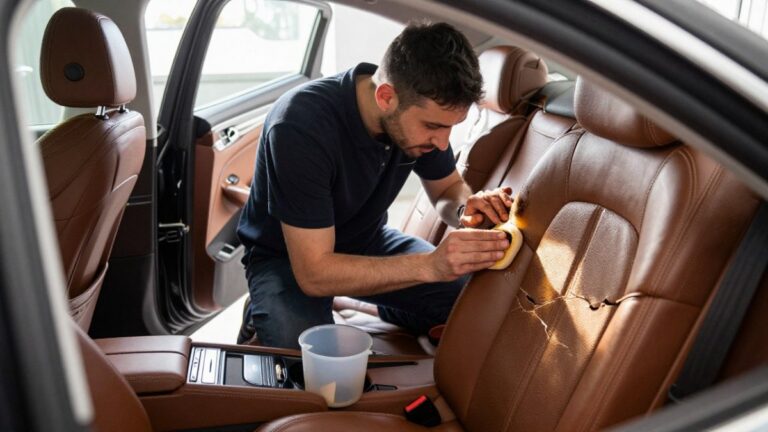
Leather is the most expensive material to repair. It needs careful colour matching, specialist fillers, and finishing to blend the repair into the surrounding grain. Fabric is usually simpler and cheaper, as a matched panel or a stitched repair can often be completed quickly. Vinyl sits between the two, and is often the easiest to patch cleanly.
Leather Car Seat Repair Cost by Tear Size and Material
Pricing depends on the length of the tear, how many panels are affected, and whether the stitching needs rebuilding.
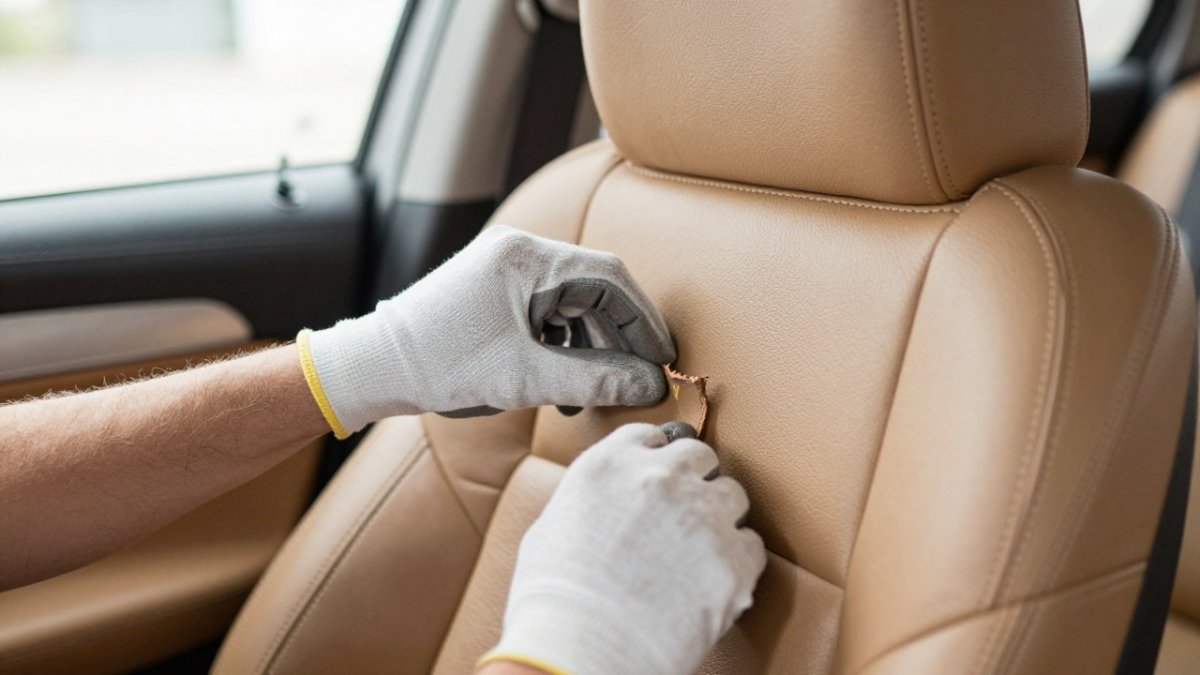
The table below gives a general guide to how cost typically scales. Actual quotes depend on the specific vehicle and damage.
| Tear size | Typical leather repair approach | Relative cost |
|---|---|---|
| Small (under 3 cm), surface only | Filler and recolouring | Lowest |
| Medium (3 to 10 cm) | Sub-patch, filler, and recolouring | Moderate |
| Large (over 10 cm) or on a seam | Stitch rebuild with panel work | Higher |
| Structural (through to foam) | Foam repair plus cover repair | Highest |
Leather repairs take more time than most people expect.
Car Upholstery Repair Prices: Localised Repair Versus Panel Replacement
Localised repair fixes only the damaged area, while panel replacement swaps out the whole section of upholstery.
Panel replacement makes sense when the tear is too large to patch convincingly or when the panel is badly worn across its whole surface.
If you are unsure which route suits your seat, ask for both options in your quote.
DIY Repair Kits Compared With Professional Repair
DIY kits cost far less upfront, but they suit only small, shallow tears on flat surfaces. Professional repair is a service provided by specialists, such as TrimKings.
| Factor | DIY repair kit | Professional repair |
|---|---|---|
| Typical upfront cost | Low | Higher |
| Best for | Small, shallow surface tears | Larger tears, seams, leather |
| Colour matching | Often visibly different | Usually matched closely |
| Time needed | Several hours, with curing time | Often completed in a single visit |
| Risk of making it worse | Moderate on leather | Low |
Watch out: Heavy-handed DIY filler on leather can leave a stiff, shiny patch that is more expensive to correct than the original tear.
Repair or Replace: Weighing the Cost Against Vehicle Value and Lease Charges
Most guides stop at the cost of a repair. The more useful question is whether repairing the tear is the right financial call at all. A simple decision framework helps: compare the repair quote against the cost of a replacement seat cover or cushion, then weigh that against the vehicle’s value and how long you intend to keep it.
Repair versus replacement at a glance
| Scenario | Typical repair cost | Typical replacement cost | Better financial choice |
|---|---|---|---|
| Small tear (under 3 cm), good surrounding material | £80-£150 | £250-£600+ per panel | Repair |
| Medium tear (3-10 cm) on a bolster | £150-£300 | £250-£600+ per panel | Repair, unless the panel is badly worn |
| Large or structural tear through to foam | £300-£600+ | £250-£600+ per panel plus fitting | Compare quotes carefully; replacement may win on heavily worn seats |
| Multiple tears across one seat | £400+ | £250-£600+ per panel plus fitting | Replacement often more cost-effective |
The key point is that repair usually wins on small, isolated damage, while replacement wins when the whole panel is tired or the repair bill approaches the cost of new upholstery.
Lease and finance considerations
If the car is leased or on finance, check the agreement before authorising any work. Many lease agreements set a damage tolerance, often based on the size of the tear and its visibility, and charge an end-of-contract fee for damage beyond that threshold. A professional repair that brings the seat back within tolerance can be cheaper than the lease charge, but the repair must be done to a standard the inspector will accept. Keep the invoice and before-and-after photos in case the damage is queried at hand-back.
For a car you own outright and plan to keep, repair protects resale value without the expense of replacement. For an older car with limited value, a tidy localised repair is almost always the sensible choice; spending several hundred pounds on a replacement panel rarely pays back at sale time.
Watch out: A cheap repair that fails within a few months can leave you paying twice, once for the failed attempt and again for the proper fix.
Mobile Car Seat Repair and How Long the Job Takes
Mobile repair means the work is done where your car is parked, which saves a trip to a workshop.
Turnaround depends on the number of tears, the material, and drying time for fillers and finishes. Ask the provider for an estimated time along with the quote so you can plan around it.
Booking Your Car Seat Repair Quote and Next Steps
Before you request a quote, spend five minutes assessing the damage yourself. A clear diagnosis helps you describe the problem accurately, spot when a professional is genuinely needed, and compare quotes on a like-for-like basis.
A quick self-inspection checklist
Work through these points and note the answers, they are the same questions a specialist will ask:
- Size: Measure the tear at its longest point. Under 3 cm, 3-10 cm, and over 10 cm fall into different pricing bands.
- Depth: Is it a surface scuff, a split through the top layer, or a tear that exposes the foam beneath? Foam damage changes the repair method and the cost.
- Location: Is it on a flat panel, a seam, or a bolster? Seams and bolsters take more labour because stitching has to be rebuilt.
- Material: Leather, vinyl, fabric, Alcantara, or perforated leather. Each behaves differently and not every specialist handles every material.
- Surrounding condition: Is the rest of the panel sound, or is it worn, cracked, or faded? A repair on tired material may not last.
- Cause: A one-off snag is different from a seam that is failing along its length, which usually points to a manufacturing or wear issue rather than accidental damage.
Signs the seat needs professional attention
Some damage is beyond a DIY kit. Seek a professional if the tear exposes foam, if the stitching has failed along a seam, if the leather around the tear is cracked or brittle, or if the tear is on a side bolster that takes weight every time you get in. Electrical elements, heated seats, side airbags, occupancy sensors, sit close to the upholstery, and a repair that disturbs them can be costly to put right.
Getting an accurate quote
Take clear photos from a few angles: a wide shot showing where the tear sits on the seat, a close-up showing its length and depth, and a shot of the surrounding material in daylight so colour can be assessed. Note the vehicle’s make, model, and year, and whether the seat is heated or ventilated. Send these with your enquiry and ask what repair method is proposed and how long the work will take.
Ask for both a localised repair price and a panel replacement price where relevant. A good provider will explain the trade-off rather than simply quoting the higher option.
TrimKings provides mobile car interior repair across the West Midlands, so the work can be done at your home or workplace with minimal disruption. Pricing depends on the size, location, and material of the damage, so we recommend sending a photo of the tear to TrimKings for a no-obligation quote before you decide.
Frequently Asked Questions
How much does it cost to repair a tear in a car seat?
Costs depend on tear size, location and material, so there is no single fixed price. Small surface tears in leather or vinyl are usually the least expensive to fix, while long seam tears or tears through foam padding cost more because they need more labour and materials. For a figure based on your own damage, send photos to TrimKings and request a no-obligation quote, which will reflect the specific repair needed.
Can a torn car seat be repaired without replacing the upholstery?
In many cases, yes. A localised repair can address a tear in the damaged area. Replacing the full upholstery is usually only needed where the damage covers large areas, the foam is badly broken down, or the panel is no longer available. A professional inspection can tell you which approach suits the damage, and it is worth checking before you agree to replacement.
Can leather car seat tears be repaired at home?
Small leather tears can be attempted with a DIY repair kit, which usually includes a filler compound, colourant and a grain sheet. Results depend heavily on skill, colour matching and how well the tear is prepared. Larger tears, seam separation or damage that reaches the foam are harder to get right at home and tend to look obvious afterwards.
Will repairing a car seat tear affect its appearance or resale value?
A well-executed repair with a colour-matched finish can help protect the interior condition that buyers and lease assessors look at. A visible patch or poor colour match can make the damage more obvious than the original tear. Keeping the seats in good condition supports resale value, which is why many owners repair tears before selling or returning a vehicle.