Last Updated: November 19, 2026
Quick Summary
Interior restoration pays off most when it removes the flaws buyers spot in the first few minutes, such as worn driver’s seat leather, steering wheel and gear knob wear, and visible tears or burns. Fix high-visibility items first, get a written quote from photos, and avoid spending more than the car’s market value supports.
- Buyers judge a used car by its interior, and visible wear can suggest the mechanics were neglected too.
- Check the driver’s seat bolster, steering wheel rim, gear selector and door armrest first, since they show wear fastest.
- Get a written quote based on photos of the actual damage, because the article does not publish fixed prices.
- Compare any quote against the likely uplift in sale price before committing to a major job.
- Avoid a full leather retrim on a low-value car, since the market value may not support the cost.
Table of Contents
- How Interior Condition Affects Resale Value
- Common Signs of Interior Wear and Damage Buyers Notice
- Car Interior Restoration Cost: Pricing by Repair Level
- Leather Car Seat Repair and Fabric Upholstery Fixes
- Repair or Replace Car Upholstery: Making the Call
- Prioritising Repairs by Likely Resale Return
- Preparing Your Car Interior for Sale: Inspection, Documentation and Restoration Limits
- Frequently Asked Questions
How Interior Condition Affects Resale Value
Buyers judge a used car by its interior more often than most sellers expect, and interior restoration is often the fastest way to change that first impression. A tired cabin signals neglect, and buyers tend to assume the mechanical side has been neglected too. Cosmetic damage gives a buyer something to negotiate with.
Interior condition matters most in the trade-in and private-sale markets, where the buyer is looking at the car up close for several minutes. A trade-in appraiser will deduct for visible wear, and a private buyer will use every tear and stain as a reason to offer less or walk away. The aim of restoration is not to make the car look new. It is to remove the objections a buyer can raise in the first five minutes of viewing.
Common Signs of Interior Wear and Damage Buyers Notice
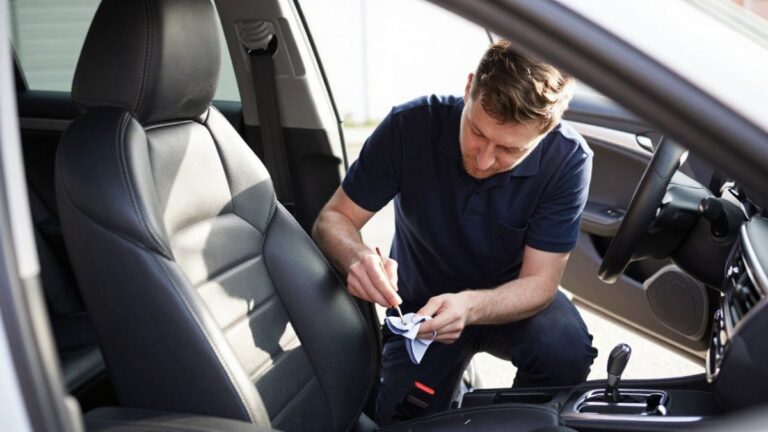
Buyers tend to check the same places. Driver’s seat bolsters, the steering wheel rim, the gear selector and the door armrest all show wear first, because they take the most contact. Look at these areas before you list the car.
The damage buyers notice most often includes:
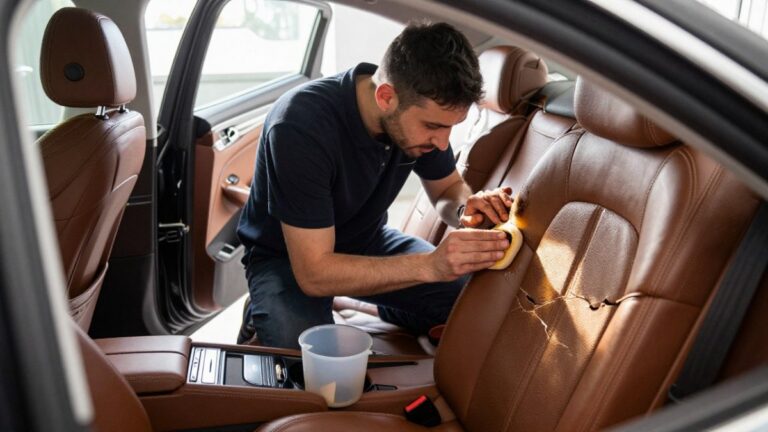
- Scuffed or cracked leather on the driver’s seat bolster
- Cigarette burns on fabric or carpet
- Small tears or split seams on the rear seats
- Faded or discoloured dashboard plastics caused by sun exposure
- Stains on the headliner or carpet
- Worn gear knob or steering wheel leather
A buyer who finds one obvious flaw will look harder for others. Fixing the most visible items first changes the way the whole car is judged.
Car Interior Restoration Cost: Pricing by Repair Level
Restoration costs vary widely with the material, the size of the damage and whether you use a specialist or do the work yourself. We do not publish fixed prices for these services because the cost depends on the vehicle, the number of panels involved and how closely the repair must match the original colour and grain. Ask for a written quote based on photos of the actual damage.
As a general guide, repairs fall into three levels:
- Minor cosmetic work such as small scuffs, light stains or a single burn on fabric. This is usually the cheapest step and often gives the best return. Pricing depends on the vehicle, the number of panels involved and how closely the repair must match the original finish, so ask for a written quote based on photos of the damage.
- Mid-level repair covering a torn seat panel, several cracked leather areas or a dashboard component that needs refinishing. Costs depend on the number of panels and whether the seat needs to come out.
- Full restoration involving multiple seats, headliner replacement or extensive leather refinishing. This level is harder to justify on an older car, so compare it carefully with the vehicle’s value.
Actual pricing depends on four main drivers: the material (leather, vinyl, cloth, alcantara), the severity of the damage (surface scuff versus split seam versus collapsed foam), the labour involved (removing seats, stripping panels, colour matching), and whether the repair is a targeted fix or a replacement.
Compare the quote with the likely uplift in sale price before committing. A specialist’s quote for a major job should be weighed against what a buyer would actually pay more for the car. Minor cosmetic repairs can reduce haggling, while full restorations on older cars may not recoup their outlay.
High-Impact vs Low-Impact Interior Repairs
High-impact repairs are the ones buyers see at a glance: visible tears, burns, and worn driver’s seat leather. Fixing these tends to change the first impression of the car.
Low-impact repairs are usually hidden or less important to buyers: rear floor carpet stains, the inside of the boot, or wear on seats that are rarely used. These can wait unless the quote is very low.
A practical way to prioritise is to rank defects by how quickly a buyer would spot them and how much the repair costs. Start with the driver’s seat bolster, steering wheel and gear knob, because these are touched and seen on every journey. Then move to passenger seats and door cards. Leave carpet stains in the rear footwells and boot trim until last, unless they are severe enough to suggest neglect.
Watch out: spending on a full leather retrim when the car’s market value does not support it is one of the most common ways sellers lose money on interior work.
Leather Car Seat Repair and Fabric Upholstery Fixes
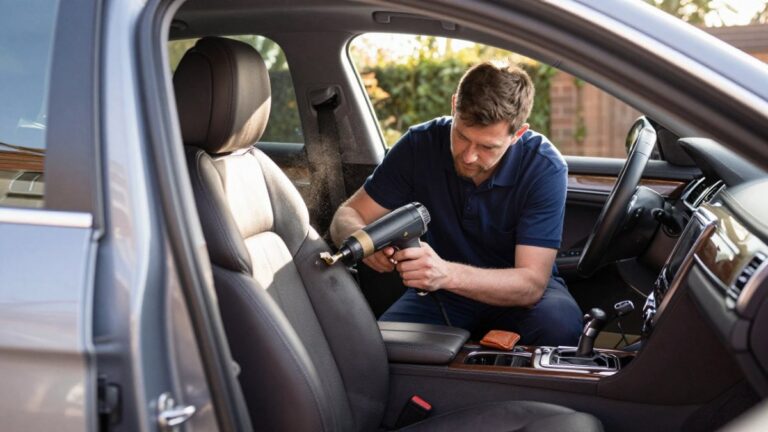
Leather repair usually starts with cleaning and assessing the surface. Surface cracks can often be filled and recoloured, while deep splits in the leather usually need a patch or a panel replacement. The key is to identify whether the damage is in the finish (the colour coat) or in the hide itself. Finish cracks can be sanded, filled and recoloured; hide splits need structural repair.
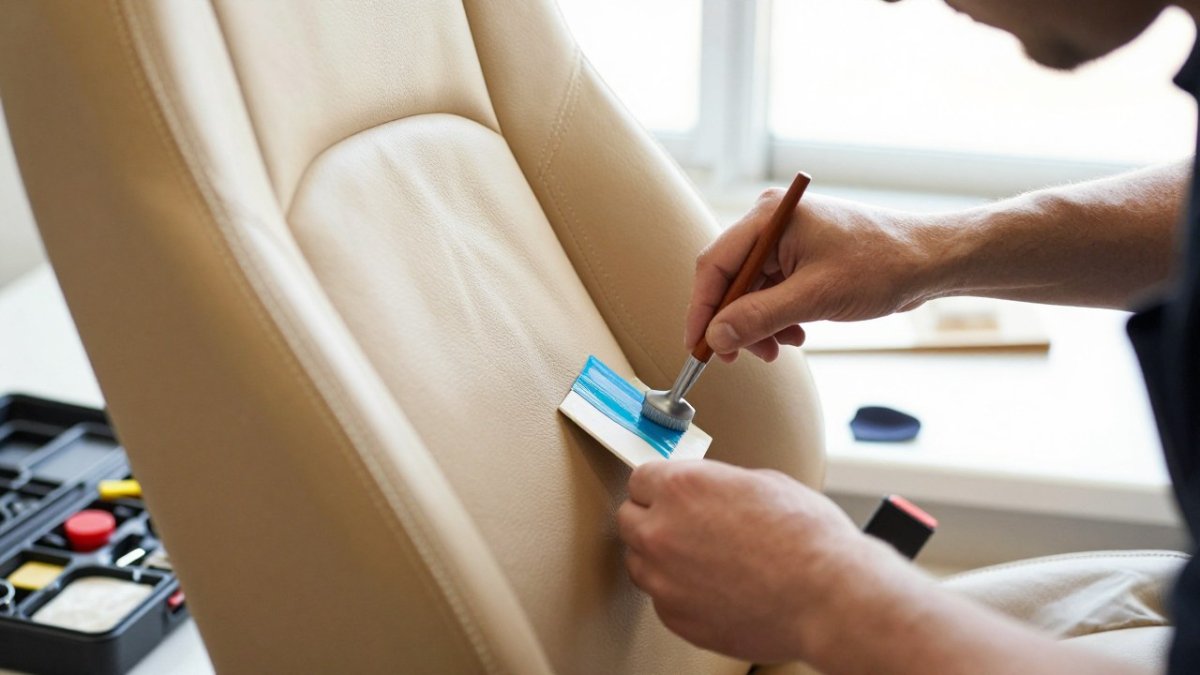
Work in daylight and test the colour on a hidden area first.
Fabric repairs are different. A small burn can sometimes be trimmed and patched, while larger tears may need a new section of fabric stitched in place. Colour matching is the hardest part of both jobs.
Material-specific limits matter.
If you want to try a DIY repair, start with a small test area and check the colour in daylight before working on the visible surface. For anything beyond a minor scuff, get a professional assessment, because a poor repair can reduce the car’s value more than the original damage.
Repair or Replace Car Upholstery: Making the Call
Replacing a full seat is rarely the right first step. A targeted repair is often a more practical option than replacing a whole seat, although a second-hand replacement may not match the rest of the interior. Repair is usually the better option when the damage is limited to one area and the rest of the seat is sound.
Replacement makes more sense when the foam is collapsed, the frame is damaged, or the upholstery is worn through across most of the surface. Ask a specialist to assess the seat before you commit to either route.
Prioritising Repairs by Likely Resale Return
Work through repairs in order of how much a buyer will notice and how much the repair costs. Start with high-visibility items that are cheap to fix. Stains and small scuffs on the driver’s area are often the best value.
Leave repairs on hidden or low-traffic areas until you have confirmed the value justifies the work. Restoring a car beyond what the market will pay is a common way to lose money on a sale.
The article ranks repairs by how visible they are and what they cost, so the table below summarises that order.
| Repair priority | Example | Why it matters |
|---|---|---|
| High-impact | Driver’s seat bolster, steering wheel, gear knob | Touched and seen on every journey |
| High-impact | Visible tears, burns, worn driver’s seat leather | Buyers spot these at a glance |
| Medium | Passenger seats and door cards | Noticed on closer inspection |
| Low-impact | Rear footwell carpet stains, boot trim | Rarely seen unless severe |
| Avoid | Full leather retrim on low-value car | Market value may not support the cost |
Preparing Your Car Interior for Sale: Inspection, Documentation and Restoration Limits
Before listing, walk around the car and note every mark, tear or stain. Photograph each one, then compare the list against the repairs you plan to do. This gives you a clear record of what was fixed and what was left as it is.
Keep receipts and any before-and-after photos, as a documented repair history can help reassure buyers. Be honest about any remaining wear in your advert, because a buyer who finds an undisclosed flaw will lower their offer or walk away.
Know your limits. Some wear, such as faded plastics on an older car, cannot be fixed to a like-new standard without disproportionate cost. Price the car to reflect its actual condition rather than trying to hide it.
For a no-obligation quote, send TrimKings a photo of the damage. TrimKings offers mobile interior repair across the West Midlands. Get a Quote to find out what a targeted repair would cost before you decide.
Frequently Asked Questions
Does restoring a car interior increase its resale value?
It can, but usually only when the damage is visible and the repair is inexpensive relative to the likely gain. Cosmetic faults such as worn leather, stained carpets, torn seat bolsters and cracked trim can make buyers and dealers lower their offer. Aim for a clean, presentable interior rather than showroom perfection.
Should I repair a cigarette burn in my car seat before selling?
In most cases, yes. A cigarette burn is an obvious sign of neglect and buyers often assume the wider car has been poorly treated. Ask for a colour-matched repair where possible, and keep the invoice to show prospective buyers.
Is it better to repair or replace damaged car upholstery?
Repair can be a practical option for localised damage such as small tears, scuffs, burns and worn bolsters. Replacement makes more sense when damage is widespread, the foam or structure underneath has failed, or the seat is unsafe. Get a quote for both where possible, then compare the total cost against the value uplift you expect at sale.
How do I know if a repair will match the rest of my leather seats?
Colour matching depends on the leather’s grain, finish and how much it has faded, so Ask for colour testing on a hidden area before work starts, and ask to see examples of previous repairs on similar materials. Be realistic: an invisible repair is not always achievable on heavily aged leather, and a well-matched repair that is visible on close inspection is still a large improvement over visible damage.