Table of Contents
- What Drives the Cost of Leather Car Seat Restoration
- Repair or Replace? Cost-to-Value for Leather Seats
- How Long Does Leather Car Seat Restoration Take?
- DIY Leather Car Seat Repair Kit Effectiveness: What to Expect
- Mobile Car Interior Repair Services: What You Get for the Cost
- How Long the Repair Lasts: Longevity and Maintenance
- Conclusion
- Frequently Asked Questions
Last Updated: September 27, 2026
What Drives the Cost of Leather Car Seat Restoration
The cost of leather car seat restoration depends on damage type, panel count, and the grade of leather fitted to your vehicle. There is no single national price, and any provider quoting a fixed figure before seeing your seats is guessing. At TrimKings, we ask for a photo because two cars with what looks like identical damage can need very different work.
Leather car seat restoration is the process of repairing and refinishing damaged upholstery, including cracks, scuffs, burns, tears and colour loss, rather than replacing the seat cover or the seat itself.
Three variables move the number more than anything else:
- Damage type. A scuff mark on a bolster is surface work. A cigarette burn that has gone through the hide needs filling, colouring and a new protective coating.
- Panel count. Seats are built from multiple panels, and each damaged panel is priced and finished separately. One worn driver’s bolster costs far less than four seats with wear across every panel.
- Leather grade. An aniline hide with an open, unfinished surface is far less forgiving than a pigmented finish, because colour has to be built up in layers rather than sprayed over a top coat.
UK driving licence and vehicle record guidance
Damage Type, Panel Count and Leather Grade
Cracked leather, scuff marks, fading and abrasion are the four most common problems, and each carries a different repair route. Cracks need filler and sanding back before colour goes on; scuffs often only need degreasing, colour restoration and a sealant; fading across a whole seat means respraying rather than spot repair.
Panel count matters because a seat is not one surface. Bolsters, headrests, centre panels and side trims are finished individually, and a repair crossing a seam takes longer. Stitching repair adds cost, since the seam must be reopened and closed properly.
Leather grade decides how much skill the colour match takes. Pigmented finishes are forgiving; aniline and semi-aniline hides show every inconsistency in colour and grain, so the finish must be built gradually.
Why a Bespoke Quote Beats a Ballpark Figure
A ballpark figure is worse than useless if it is wrong, because it sets an expectation the finished job cannot meet. A bespoke quote is built from the actual damage: panel count, damage depth and leather type.
Send a photo of the damage and a reputable provider can give you a realistic assessment before anyone travels to you. What most guides miss is that the quote should also state what is not included, such as replacing a panel that is torn beyond repair or matching vinyl vs leather on an adjacent trim.
Accepting a quote without a written breakdown of panels and finish type is the most common way owners end up paying more than expected. Ask what happens if the colour match needs a second visit.
Repair or Replace? Cost-to-Value for Leather Seats
Repair usually wins on value when the damage is cosmetic and the seat structure is sound. Replacement wins when the leather is torn through in multiple places, the foam has collapsed, or the seat has water or mould damage. What most guides skip is the actual arithmetic.
The cost-to-value calculation runs in three steps.
Step one: establish the repair figure. A single-panel bolster repair, involving degreasing, filling, colouring, and sealing, will vary in cost. A full seat with multiple damaged panels or a complete interior will also have varying costs. These are ranges, not quotes.
Step two: establish the replacement figure. A replacement seat cover for a mainstream model can be costly for the part alone, before fitting. A full interior re-upholstery in a quality hide can be a significant investment, particularly for luxury or classic vehicles, as the hide is priced by the square metre and the labour is measured in days. Add matching adjacent trim, and the gap widens fast.
Step three: weigh both against the vehicle’s value. This is the step owners skip. A repair costing several hundred pounds on a car worth a few thousand is a meaningful proportion of its value, and must be justified by keeping the car or protecting its sale price.
When to Replace vs When to Repair
Use this as your decision guide:
| Situation | Better option | Why |
|---|---|---|
| Scuffs, fading, light cracking | Repair | Cosmetic, surface-level work |
| Cigarette burns | Repair | Filler and colour rebuild the surface |
| Single torn panel | Repair | Panel replacement is rarely needed |
| Multiple tears with collapsed foam | Replace | Structure is compromised |
| Water damage or mould across seats | Replace | Repair will not hold |
| Lease return with minor damage | Repair | Cheaper than end-of-lease charges |
| Get a second opinion | Replacement or part-exchange may win |
For lease holders, repair is almost always the sensible route. End-of-lease penalty charges for interior damage can be steep, and a properly refinished seat matching the original colour removes the argument. The same logic applies when selling privately: a buyer can tell a mismatched replacement panel from a correctly refinished original, and the original-fit repair protects your asking price.
Repair is not automatically the cheaper option, it is the cheaper option when the repair figure is small relative to what the car is worth. Run the three steps before you accept either quote.
How Long Does Leather Car Seat Restoration Take?
A single-panel leather car seat restoration typically takes a few hours on site, while a full interior with multiple panels and colour work can take a full day or more. Drying and curing time between coats cannot be rushed.
Sequencing usually runs like this:
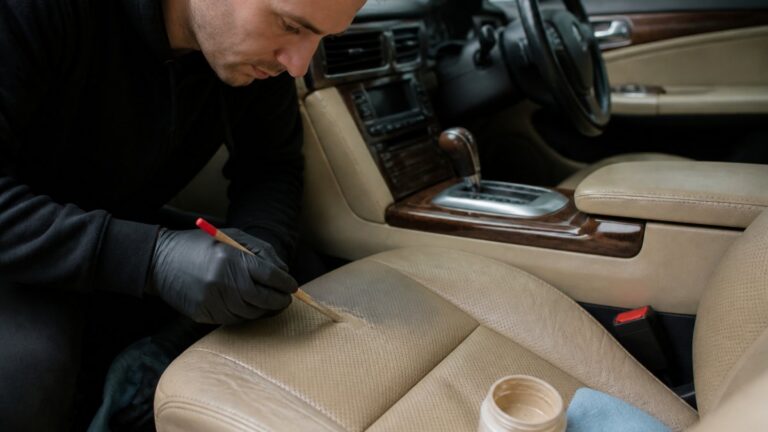
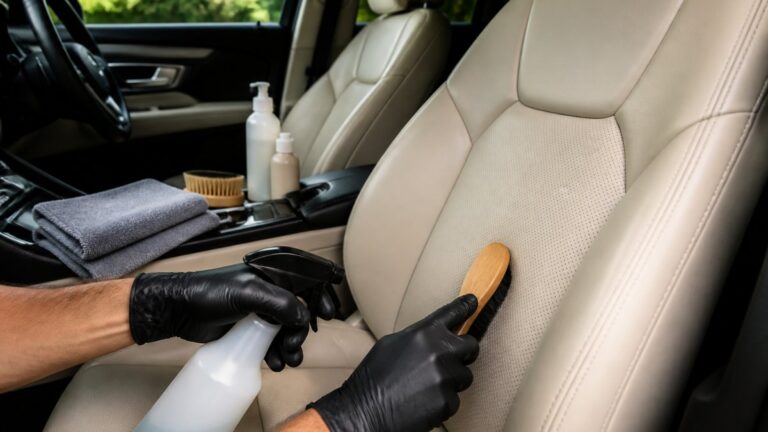
- Clean and degrease the panel
- Assess the grain and mix the colour
- Fill cracks and burns, then sand back
- Apply colour in thin layers, buffing between coats
- Seal with a protective coating
- Allow the finish to cure fully
DVLA vehicle tax and MOT status checker
DIY Leather Car Seat Repair Kit Effectiveness: What to Expect
DIY leather car seat repair kit effectiveness is genuinely good for small scuffs and light colour loss, and poor for tears, burns or a colour that must match exactly. The kit is not the limiting factor, colour matching and surface preparation are.
Tools and Kits for Leather Restoration
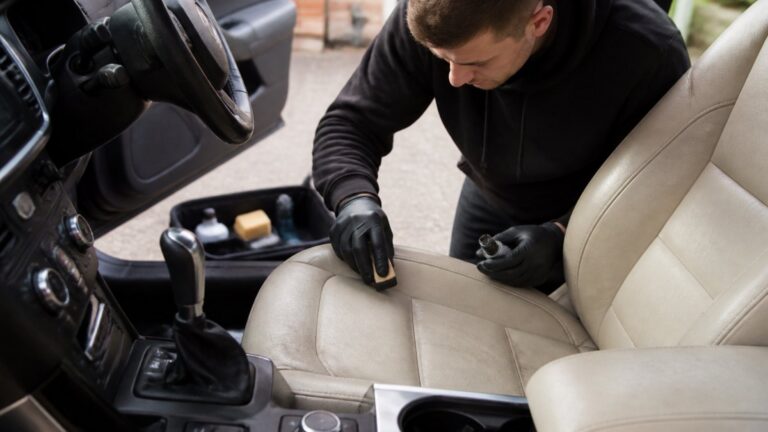
A basic kit covers the following:
- Leather cleaner and degreaser
- Leather filler for cracks and small holes
- Colourant matched to your interior code
- Sanding pads in fine grades
- Applicator sponges and cloths
- Leather sealant or protective coating
What a kit will not fix: seam repair, stitching repair, torn panels, or a colour match on aniline leather. If your damage falls into any of those, a professional assessment costs less than a failed DIY attempt plus the repair afterwards.
Photograph the damage in daylight, not under a garage light. Colour matching decisions are made from that photo, and artificial light shifts the tone enough to change the mix.
Mobile Car Interior Repair Services: What You Get for the Cost
Mobile car interior repair services bring the technician, tools and colour mixing equipment to your home or workplace, so the vehicle never leaves your possession. You pay for the same repair work as a workshop visit, without the drop-off and collection time.
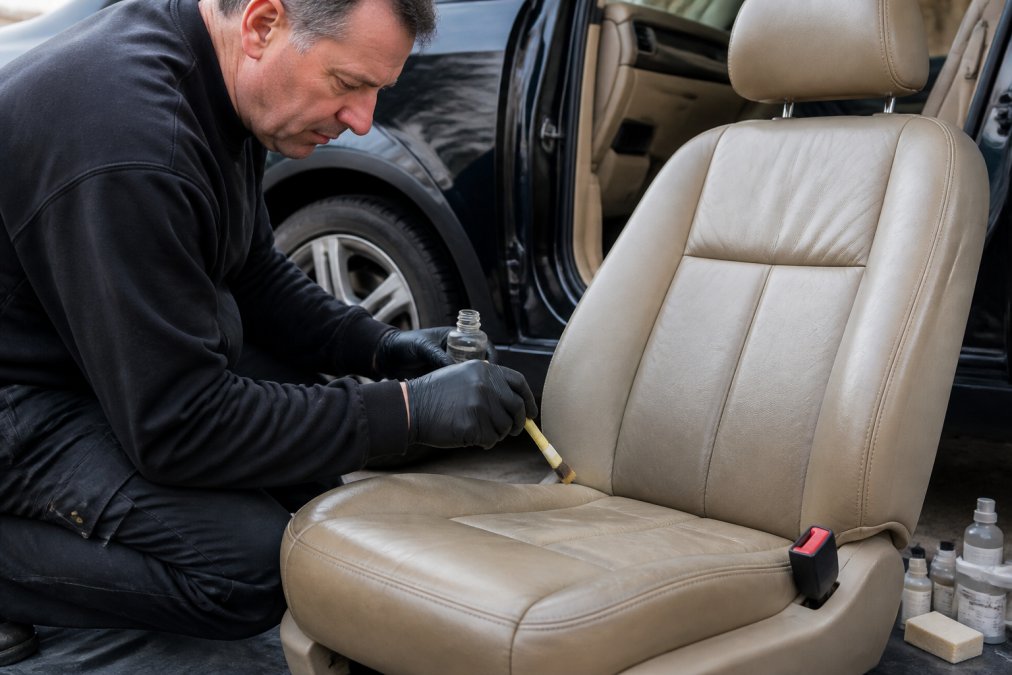
What you get in a mobile visit:
- On-site assessment of the damage
- Full colour mixing and matching to your interior
- Repair and refinishing of leather, vinyl and dashboard trim
- Interior detailing of the treated area
- A no-obligation quote before any work starts
How Long the Repair Lasts: Longevity and Maintenance
A correctly executed leather car seat restoration lasts for years, not months, provided the finish is maintained. Longevity is not one number, it varies by leather type, how well the panel was prepared, and how the seats are treated afterwards.
Maintenance is straightforward and cheap:
- Clean with a pH-neutral leather cleaner every few months
- Condition the leather to stop it drying out
- Keep seats out of prolonged direct sun where possible
- Treat new scuffs early, before they become cracks
Longevity is decided before the colour goes on. Preparation and leather type set the ceiling; maintenance decides whether you reach it.
Conclusion
Getting a realistic figure for the cost of leather car seat restoration comes down to one thing: an accurate assessment of your actual damage, not a generic price list. Damage type, panel count and leather grade decide the number, and a photo is usually enough for a proper quote.
Frequently Asked Questions
How much does it cost to refurbish leather car seats?
There is no single figure because pricing depends on the number of panels affected, the type of leather, and the extent of the damage. Minor scuffs and cracked leather on one bolster cost far less than full seat refinishing or reupholstery. Most specialists in the West Midlands assess damage from photos before quoting, so send clear images of every affected area and ask for a bespoke quote rather than relying on a generic price list.
Is it cheaper to reupholster car seats or buy new ones?
Reupholstery is almost always cheaper than replacing seats, particularly for luxury or classic vehicles where replacement parts are scarce and costly. Reupholstery also lets you keep the original seat frames and match the existing leather grain and stitching. The cost of leather car seat restoration depends on panel replacement, colour matching and labour, so get a professional assessment before deciding between repair, reupholstery and replacement.
Can old leather car seats be restored?
Yes, in most cases. Cracks, tears, fading, scuff marks and abrasion can be repaired using leather filler, dye, and a pigmented finish, followed by a protective coating. Aniline and other delicate leathers need gentler treatment than pigmented finishes. Severely degraded leather with widespread cracking across multiple panels may need panel replacement or full reupholstery, so a professional assessment is the fairest way to judge what is realistic.
What factors influence the price of mobile leather repair?
The main factors are damage type and size, the number of panels involved, leather type (pigmented, aniline or synthetic leather), and whether colour matching or respraying is needed. Location matters too: mobile car interior repair services travel to your home or workplace, which saves you dropping the car off. Because TrimKings has not published fixed prices, request a no-obligation photo quote so the figure reflects your actual damage.