Table of Contents
- When Professional Interior Repair or Restoration Is Worth It
- Repair Versus Replacement: The Real Cost Difference
- Cosmetic Damage Versus Structural Damage
- Car Interior Repair Cost: What Affects Your Quote
- Professional Versus DIY Car Interior Repair
- Leather Car Seat Repair and Upholstery Restoration
- Cigarette Burn Repair and Spot Damage Solutions
- How to Evaluate a Repair Provider
- Frequently Asked Questions
Last Updated: October 20, 2026
When Professional Interior Repair or Restoration Is Worth It
Professional car interior repair is worth considering when the cost of repair falls significantly below replacement, when the damage affects your vehicle’s resale value or lease return condition, or when the repair restores comfort and functionality without major disruption to your schedule. Most vehicle owners underestimate how cost-effective professional restoration can be compared to buying new interior components.
The decision hinges on three factors: the extent of damage, the age and value of your vehicle, and your timeline. A small cigarette burn or minor tear in a leather seat might cost far less to repair than replacing the entire seat assembly. For lease vehicles especially, professional repair often becomes essential to avoid end-of-lease charges that can run into hundreds of pounds.
However, not every interior issue warrants professional attention. Superficial scuffs on plastic trim or fading on fabric seats may improve appearance but won’t necessarily justify the cost. The key is understanding when restoration genuinely protects your investment versus when it’s purely cosmetic.
Repair Versus Replacement: The Real Cost Difference
When you’re facing interior damage, the choice between repairing and replacing comes down to practical economics. Replacing an entire car seat, dashboard panel, or upholstery section typically costs substantially more than targeted professional repair. A single replacement seat can easily exceed the cost of professional repair of damage to that same seat, which often costs a fraction of that amount.
The real advantage of repair becomes clear when you consider what replacement actually involves. You’re not just paying for the new component, you’re paying for removal of the old one, disposal, installation labour, and often colour matching or customisation to fit your vehicle’s interior. Professional repair eliminates most of these expenses by restoring what you already have.
For commercial fleet operators, this distinction matters enormously. Repairing interior damage across multiple vans is far more cost-effective than replacing seats or panels across a fleet. The cumulative savings over time make professional repair the obvious choice for maintaining a professional company image without draining the maintenance budget.
That said, replacement becomes the better option when damage is structural rather than cosmetic. A seat frame that’s cracked or a dashboard that’s warped beyond safe repair may require replacement. Professional technicians can advise whether your damage falls into the repairable category or if replacement is genuinely necessary.
Cosmetic Damage Versus Structural Damage
Understanding the difference between cosmetic and structural damage is crucial for making the right repair decision. Cosmetic damage affects appearance but not function, cigarette burns, surface scratches, scuffs, stains, and minor tears in upholstery. These can usually be repaired professionally without compromising safety or comfort.
Structural damage, by contrast, affects the integrity of the component. A cracked seat frame, torn suspension webbing beneath upholstery, broken dashboard supports, or damage that compromises airbag functionality falls into this category. Structural issues may require replacement rather than repair, and attempting to repair them without addressing the underlying problem can create safety risks.
A professional repair provider will assess which category your damage falls into. Minor tears in leather seats are almost always repairable. Cracks in plastic dashboard panels are usually repairable. But if the underlying structure is compromised, if a seat no longer provides proper support, or if a panel has structural cracks rather than surface damage, replacement becomes the safer and more practical choice.
For lease vehicle holders, this distinction is especially important. Dealerships conducting lease-return inspections will note structural issues as damage beyond normal wear and tear, triggering penalty charges. Cosmetic repairs can help you avoid these charges, but structural issues that haven’t been properly addressed will still be flagged.
Car Interior Repair Cost: What Affects Your Quote
Several factors influence the final cost of professional car interior repair. The type of material being repaired matters significantly, leather restoration typically costs more than fabric repair because the process requires specialist knowledge and colour-matching capability.
The extent of damage directly affects pricing. A single cigarette burn is far cheaper to repair than multiple burns across several seats. Similarly, a small tear in upholstery costs considerably less than extensive damage requiring full panel replacement or reupholstering.
Labour time is another key factor. Repairs requiring extensive preparation, colour matching, or drying time will naturally cost more than straightforward fixes. A scuff on plastic trim that requires light sanding and touch-up takes less time than a deep tear in leather that requires careful stitching and finishing.
Vehicle type also influences cost. Luxury supercars with bespoke interiors or specialty materials may require premium repair services and specialist technicians, increasing the overall cost. Commercial vans with simpler interiors often cost less to repair. The complexity of accessing the damaged area matters too, some interior panels are easier to work on than others.
Location of damage within the vehicle can affect the quote. Damage on high-visibility surfaces like driver seats or dashboards may require more meticulous work than damage on rear seats. Professional repair providers factor in the visibility and importance of the area when calculating labour costs.
Professional Versus DIY Car Interior Repair
Attempting DIY repairs on car interiors often seems like a cost-saving measure, but the results rarely justify the effort. DIY solutions for leather or vinyl damage typically involve adhesive patches or temporary sealants that deteriorate quickly and create visible repairs that harm your vehicle’s appearance and resale value.
Professional repair offers several advantages that DIY cannot match. Technicians have access to specialist materials, colour-matching systems, and techniques refined through hundreds of repairs. They can blend repairs seamlessly so damage becomes virtually invisible. They understand the chemistry of different upholstery materials and know which restoration methods will last.
For lease vehicles, DIY repairs create particular problems. Dealership inspectors will immediately spot amateur patches and repairs, often triggering larger penalty charges than the original damage would have caused. Professional repairs, by contrast, meet dealership standards and can help you avoid these penalties entirely.
Time is another consideration. Professional mobile repair services come to your home or workplace, minimising disruption to your schedule. DIY attempts often drag on for weeks, especially if you’re learning the technique as you go. Professional technicians complete most repairs in a single visit.
The durability difference is substantial. A professional leather repair will last for years. A DIY patch may hold for months before peeling or discolouring. When you factor in the cost of redoing a failed repair, professional work often proves cheaper in the long run.
Attempting to repair cigarette burns or deep tears with superglue, fabric glue, or patch kits often makes the damage worse. These materials can discolour upholstery, create stiff patches, or fail entirely within weeks. Professional repair is almost always more cost-effective than a failed DIY attempt followed by professional repair.
Leather Car Seat Repair and Upholstery Restoration
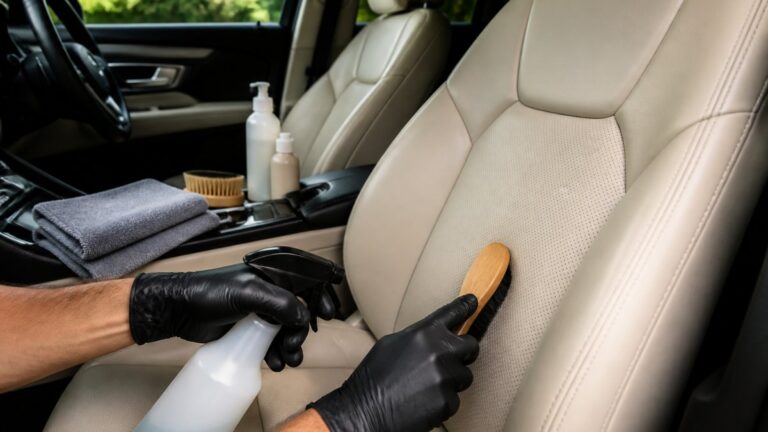
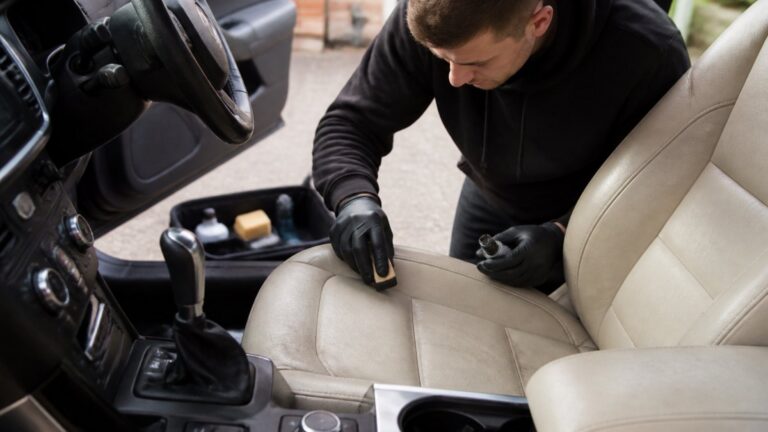
Leather car seats demand specialist attention because the material is delicate and requires precise colour matching. Professional leather car seat repair addresses tears, burns, scuffs, and fading through techniques that restore both appearance and durability. A skilled technician can repair significant damage while maintaining the seat’s original finish and feel.
The process typically involves assessing the damage, preparing the leather surface, applying specialist compounds or patches, colour matching to the original upholstery, and finishing the repair so it blends seamlessly. The quality of colour matching is critical, a visible colour difference will stand out immediately and defeat the purpose of repair.
Fabric upholstery requires different techniques but equally specialist knowledge. Fabric repairs often involve careful stitching, patching, or dyeing to restore appearance. The challenge with fabric is that repairs can sometimes be visible as seams or patches, especially on high-wear areas. Professional technicians use methods that minimise visibility and restore durability.
For luxury vehicles with premium leather interiors, professional restoration can preserve significant value. A £3,000 leather seat that’s been professionally repaired maintains its appearance and functionality far better than one with amateur patches. For commercial fleet operators, maintaining presentable upholstery across multiple vehicles is essential for company image, making professional restoration a worthwhile investment.
Before committing to a repair, ask your technician about colour-matching samples. Professional providers can show you exactly how the repaired area will look once finished. This gives you confidence that the repair will be invisible or nearly invisible, not a visible patch.
Cigarette Burn Repair and Spot Damage Solutions
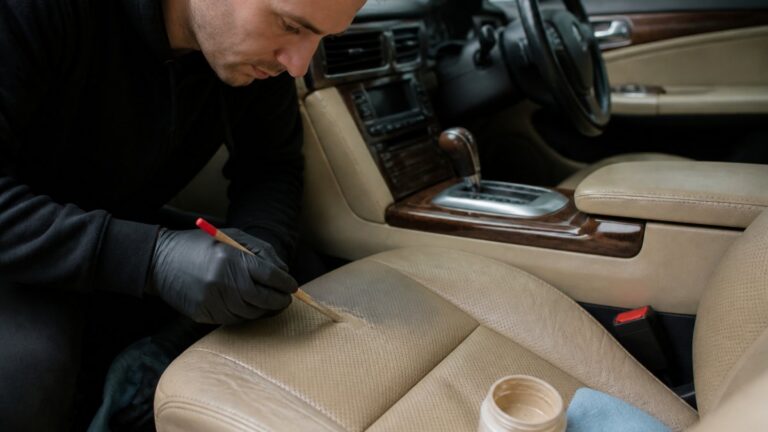
Cigarette burns are among the most common interior damage issues, particularly in fleet vehicles and older cars. Cigarette burn repair can range from simple cosmetic fixes for surface burns to more complex restoration for deep burns that damage multiple layers of upholstery.
A surface burn affects only the top layer of fabric or leather and can often be repaired by carefully removing the damaged material and blending the surrounding area.
Deep burns that penetrate through upholstery into the seat foam or underlying structure require more extensive work. The technician may need to remove the damaged section, replace underlying materials if necessary, and carefully restore the top layer.
The visibility of a cigarette burn repair depends on its location and the skill of the technician. Burns on highly visible areas like the driver’s seat require more meticulous work than burns on rear seats. Professional technicians understand these visibility considerations and adjust their approach accordingly.
For lease vehicle holders, cigarette burns are a significant concern because dealerships view them as evidence of smoking in the vehicle, which violates most lease agreements.
Other spot damage, scuffs, small tears, stains, fading, responds well to professional restoration. Each type of damage requires slightly different techniques, but the principle remains the same: professional repair restores appearance and functionality at a fraction of replacement cost.
How to Evaluate a Repair Provider
Choosing the right repair provider is essential because quality varies significantly across the industry.
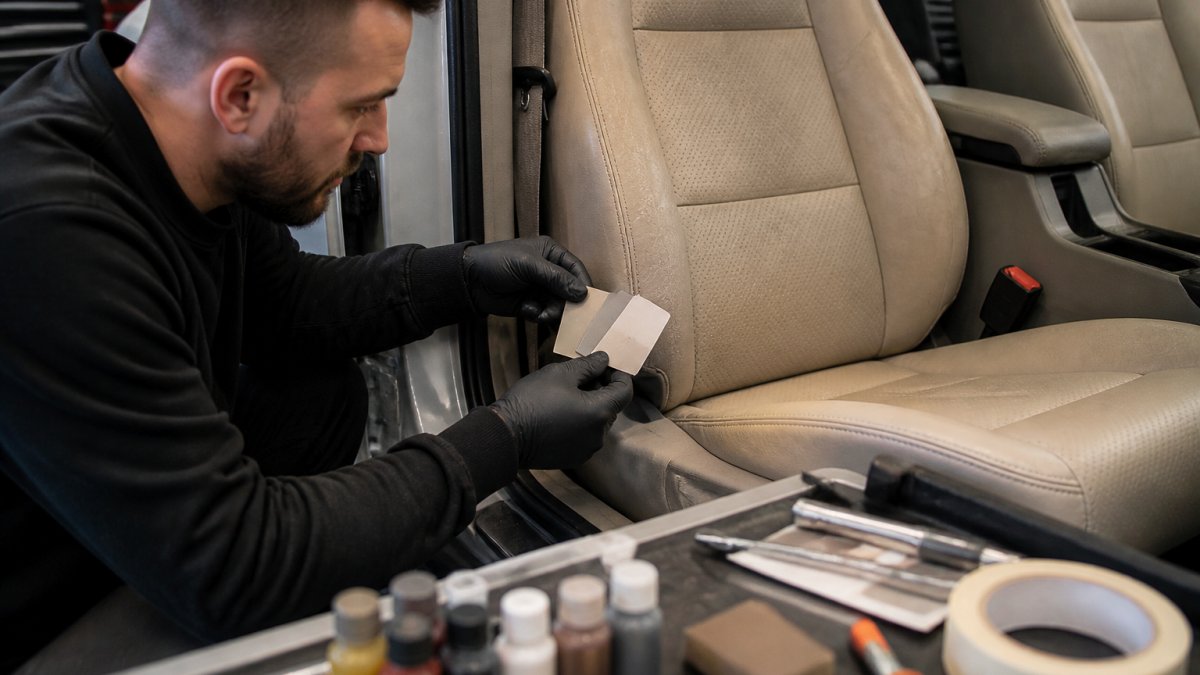
Request before-and-after photos of previous repairs. A reputable provider will have a portfolio showing how their work looks once completed.
Ask about their materials and techniques. Professional providers use specialist compounds, dyes, and restoration materials specifically formulated for automotive interiors.
Check whether they offer a no-obligation quote based on photos. A professional provider like TrimKings can assess damage from images and provide a competitive quote before you commit.
Ask about turnaround time. Most quality repairs can be completed efficiently. Providers offering same-day service for complex repairs should raise questions, proper restoration takes time.
Verify their experience with your vehicle type. A technician experienced with luxury supercars may approach repairs differently than one working primarily on commercial vans.
Finally, ask about guarantees or warranties on their work. A provider confident in their repairs will stand behind them.
The best repair provider combines specialist knowledge, quality materials, proven results (shown in photos), competitive pricing, and the convenience of mobile service. Ask for a photo-based quote from multiple providers before deciding, this costs nothing and reveals which technician understands your specific damage best.
Professional car interior repair is worth it when the cost of restoration falls well below replacement, when damage affects your vehicle’s appearance or lease-return condition, or when repairs can be completed quickly without major disruption.
TrimKings provides expert mobile car interior repair and restoration services directly at your home or workplace.
Frequently Asked Questions
How much does professional car interior repair typically cost?
Cost varies widely depending on damage type, material, and repair scope. Spot repairs like cigarette burns or small tears cost less than full seat restoration. Professional repair generally costs significantly less than replacing components, but exact pricing depends on your specific damage. Contact a repair specialist for a detailed quote based on photos or an in-person assessment.
Is professional car interior repair worth it compared to DIY attempts?
Professional repair offers colour matching, durability, and warranty protection that DIY methods rarely achieve. Professionals have specialist equipment and materials designed for leather, vinyl, and fabric. DIY repairs often look temporary or mismatched, especially on visible surfaces. For cosmetic damage affecting resale or lease return, professional repair protects your investment and saves frustration.
Can cigarette burns in car seats be repaired professionally?
Yes. Professional technicians repair cigarette burns through spot repair techniques that blend the damage seamlessly. The repair involves cleaning, colour matching, and applying specialist materials to restore the surface. Quality professional repairs are durable and virtually undetectable, making them far superior to DIY patch attempts and protecting your vehicle’s value and lease return condition.
When should I replace interior components instead of repairing them?
Replace components when structural damage affects safety, when damage is extensive across multiple areas, or when repair cost approaches a significant percentage of replacement cost. Structural issues like dashboard cracks affecting airbag deployment or seat frame damage require replacement. Minor cosmetic damage, tears, and wear and tear are almost always cost-effective to repair rather than replace.