Table of Contents
- What Car Interior Repair Services Cover in 2026
- Step-by-Step: How a Professional Interior Repair Is Carried Out
- Mobile Car Interior Repair: How On-Site Work Saves You Time
- Car Interior Repair Cost: What Drives the Quote
- Leather Car Seat Repair: What Can and Cannot Be Saved
- Cigarette Burn Repair on a Car Seat: The Realistic Outcome
- Repair or Replace? Deciding When to Stop Fixing
- How to Choose and Verify a Car Interior Repair Provider
- Frequently Asked Questions
Last Updated: October 17, 2026
What Car Interior Repair Services Cover in 2026
Car interior repair is the restoration of damaged seats, trim, dashboards and roof linings without replacing the whole part. At TrimKings, we handle this work on driveways and office car parks across the West Midlands, and the range of fixes has widened over the past few years. A modern car interior repair service covers four material families: leather, fabric, vinyl and hard plastic.
Leather, fabric, vinyl and hard-surface work
Here is what each material involves:
- Leather: re-dyeing worn bolsters, filling cracks, and repairing tears and cigarette burns.
- Fabric: re-weaving torn cloth, patching holes, and deep-cleaning stained upholstery.
- Hard surfaces: sanding and retexturing scratched dashboard plastic, door cards and centre consoles.
The goal is always the same. Make the damage disappear, not just cover it up.
Step-by-Step: How a Professional Interior Repair Is Carried Out
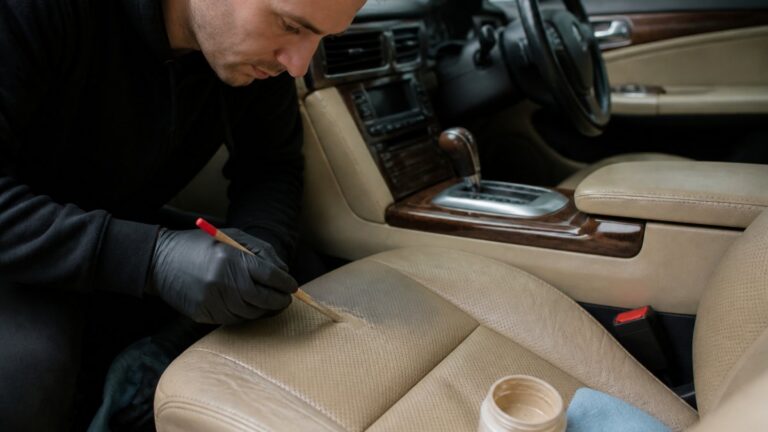
Most repairs follow six stages, and a straightforward seat fix can be finished in a single visit. Here is the sequence we use.
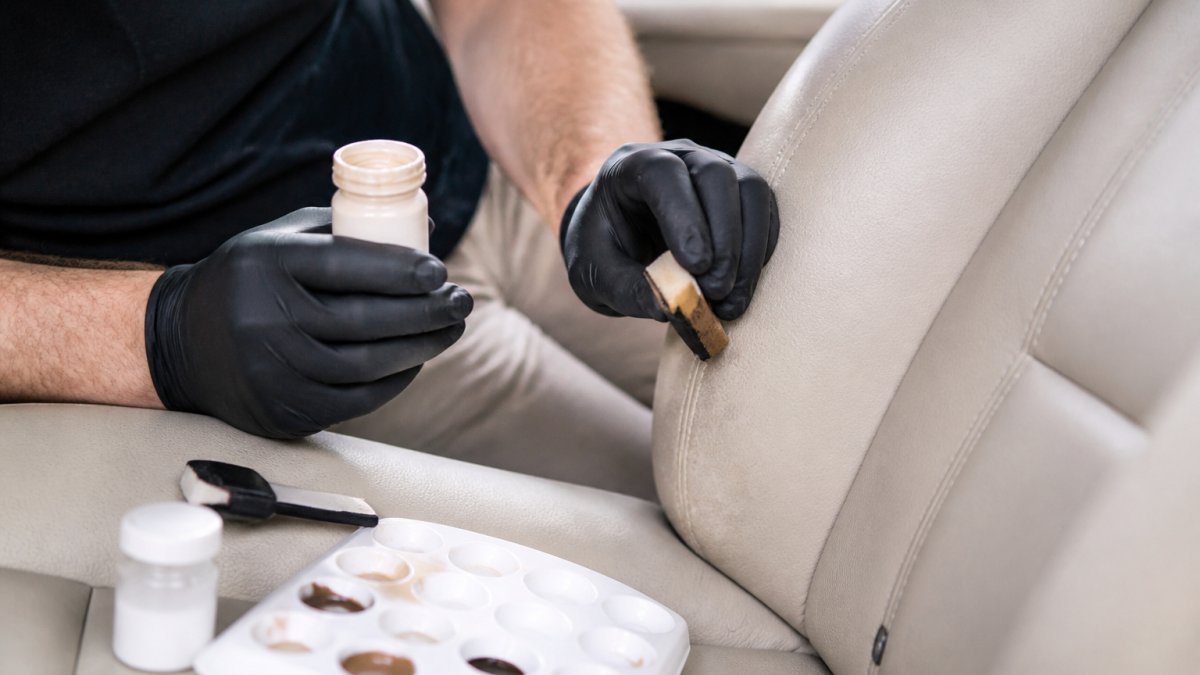
- Inspect the damage. Check the depth of the tear and whether the foam underneath has collapsed.
- Clean the area. Dirt and silicone stop dye from bonding, so the surface gets a thorough clean first.
- Fill and level. Flexible filler rebuilds the shape of a torn or cracked section.
- Match the colour. A technician mixes dye against the actual seat, not a colour code.
- Apply and blend. Thin coats go on in layers, feathering the edges into the surrounding material.
- Seal and finish. A protective top coat restores the factory texture and sheen.
Assessment, colour matching and finishing
Colour matching is where cheap repairs fall apart. Sun fade means the original colour has shifted, so a code alone will not work. A good technician mixes by eye under natural light and tests a hidden patch before committing.
Ask any provider how they match colour. If the answer is “we use the manufacturer code,” expect a visible patch. Sun-faded leather rarely matches its factory code after a few years.
Mobile Car Interior Repair: How On-Site Work Saves You Time
Mobile car interior repair brings the workshop to your driveway or workplace, so the vehicle never leaves your sight.
The practical benefit is time. A garage visit usually means dropping the car off, arranging a lift, and losing the vehicle for a day or more.
Fleets gain the most. A commercial operator can have a row of vans tidied up in one morning without taking any off the road for long.
Car Interior Repair Cost: What Drives the Quote
Car interior repair cost depends on four things: the size of the damage, the material, the part involved, and how hard the colour is to match. There is no single rate card, because a cigarette burn on a black leather seat is a very different job from a torn fabric bench seat in a light grey.
The main cost drivers:
- Damage size and depth. A surface scuff is quick. A tear through to the foam takes longer.
- Material. Leather and alcantara need more careful finishing than vinyl.
- Location on the car. A front bolster is easy to reach. A third-row seat or roof lining is not.
- Colour difficulty. Metallic, pearlescent and heavily faded finishes take more mixing time.
Itemised price guide by material and damage type
Most providers quote per panel rather than per hour, and the figure moves with the material and the depth of the damage. A written quote after a photo assessment is the only reliable number.
| Material | Typical damage | Indicative price range (GBP) |
|---|---|---|
| Leather | Scuff or colour wear on one bolster | £60-£120 |
| Leather | Single cigarette burn | £75-£150 |
| Leather | Small tear (under 25mm) | £90-£180 |
| Leather | Multiple cracks across one panel | £120-£250 |
| Fabric | Single hole or tear re-weave | £70-£140 |
| Fabric | Stain removal and deep clean (per seat) | £40-£90 |
| Vinyl | Split or puncture, one panel | £60-£130 |
| Vinyl | Heat-weld and re-grain, larger area | £100-£200 |
| Hard plastic | Dashboard or door-card scuff retexture | £50-£110 |
| Roof lining | Sagging section re-glue | £80-£180 |
| Roof lining | Full headlining replacement (fabric and labour) | £250-£550 |
Two patterns are worth knowing. First, the price is driven more by the number of panels than by the total area: three small burns on three separate seats usually cost more than one larger tear on a single seat.
What a written quote should itemise
A quote that just says “seat repair, £X” is hard to compare. A useful written quote breaks out:
- The panel or panels being worked on
- The repair method (re-dye, re-weave, heat-weld, filler and retexture)
- Whether the foam or backing is being replaced
- The colour-matching approach
We quote from a photo, so you get a fixed figure before anyone touches the car. That quote is no-obligation: send the picture, get the number, and decide from there.
Repair versus replacement: the real comparison
| Factor | Repair | Replacement |
|---|---|---|
| Cost | Lower, based on damage only | Full part price plus fitting |
| Time off the road | Often under a day | Days to weeks |
| Original parts kept | Yes | No |
| Best for | Cosmetic damage, burns, scuffs, small tears | Structural failure, collapsed foam, airbag-torn seats |
Replacement wins when the seat frame or foam has failed. For cosmetic damage, repair almost always costs less and keeps the original trim.
Ask for the quote in writing with the panel and method named. A verbal figure that does not say which panel or which method is being priced is impossible to compare against a second quote.
Leather Car Seat Repair: What Can and Cannot Be Saved
Leather car seat repair works well on many damage, but not all of it. Knowing the difference saves you money.
What can be saved:
- Surface cracks and creasing
- Scuffs and colour wear on bolsters
- Cigarette burns
- Small tears and punctures
What cannot:
- Leather worn through to the backing across a large area
- Collapsed or crumbled foam underneath
- Seats damaged by airbag deployment
- Severe rot or water damage
A tear that keeps coming back usually means the foam underneath has failed. Filling the leather without fixing the foam is a patch that will split again within months.
Cigarette Burn Repair on a Car Seat: The Realistic Outcome
Cigarette burn repair on a car seat is one of the most common jobs we see, and the results are usually excellent. A burn leaves a small crater with a hardened rim.
On leather and vinyl, a good repair is very hard to spot.
Be honest with yourself about the goal. A burn repair restores the seat to a good standard, not a factory-new one.
Repair or Replace? Deciding When to Stop Fixing
The decision comes down to one question: is the damage cosmetic or structural? Cosmetic damage, meaning scuffs, burns, cracks and small tears, is almost always worth repairing. Structural damage, meaning a broken frame, failed foam or a torn seam that keeps splitting, points to replacement.
A simple rule of thumb:
- One damaged panel on an otherwise sound seat: repair.
- Damage across most of the seat: compare quotes before deciding.
- Foam or frame failure: replace.
Repair protects the value of the original trim. Replacement resets the part but costs more and can leave a colour mismatch against the rest of the interior.
How to Choose and Verify a Car Interior Repair Provider
Choosing a provider comes down to evidence. Ask for photos of completed work on the same material and colour as your damage. Ask how they match colour. Ask what happens if the finish does not match. A provider who cannot answer those three questions clearly is a risk, however low the quote.
The verification checklist, and what a good answer looks like
- Before-and-after photos of similar repairs. Good: photos on the same material and a similar colour, ideally with the damage type named. Weak: stock images or a gallery of unrelated work.
- Colour-matching method. Good: mixed by eye against the actual panel under daylight, with a test patch. Weak: “we use the manufacturer code”, sun fade means the code rarely matches after a few years.
- Fixed quote in writing. Good: itemised by panel and method, with any call-out charge stated. Weak: a verbal range that changes on arrival.
- Mobile or workshop-only. Good: a clear answer, because it affects your time and the price. Weak: vague, or a mobile promise that turns into a workshop drop-off.
Mobile versus workshop: the real trade-off
Mobile work suits cosmetic damage, scuffs, burns, small tears, colour wear, because the kit fits in a van and the job needs no ramp or spray booth. It keeps the vehicle on your drive and lets you watch the work.
A provider who offers both and tells you honestly which your job needs is a better sign than one who promises everything can be done on the drive.
Questions that separate experience from sales talk
- “Which repair method would you use on this damage, and why?”, a specific answer (re-weave, heat-weld, filler and retexture) shows they have assessed it.
- “How long should the repair last, and what would make it fail?”, a realistic answer names foam condition, sun exposure and aftercare.
- “What aftercare do you recommend?”, leather conditioner, avoiding harsh cleaners, and keeping the repaired panel out of direct sun for the first few days are common answers.
- “Can you show me a repair you did on this material in a similar colour?”, the single most useful question.
Send a photo in daylight, not under a garage light. It gives the technician a far better read on the true colour and the depth of the damage, which means a more accurate quote first time, and it lets you compare quotes on a like-for-like basis.
At TrimKings, we work from photos so you know the price before you commit, and we cover everything from family cars to supercars and commercial fleets. You can check the DVLA guidance on vehicle modifications and repairs if you are unsure how a repair affects your vehicle record.
Frequently Asked Questions
How much does car interior repair cost?
There is no single figure. A car interior repair cost depends on the material, the size and depth of the damage, how many panels are affected and whether parts need removing. A single scuff or cigarette burn on one seat is a much smaller job than a torn bolster or a sagging roof lining. Because quotes vary that widely, send a clear photo of the damage and ask for an itemised quote listing each repair, so you can compare like for like rather than headline prices.
Can a mobile car interior repair service fix damage at my home or work?
Yes, most cosmetic interior work, including leather seat repair, fabric patching, vinyl scuffs and cigarette burn repair, can be done on site with the right equipment and power supply. Mobile car interior repair suits busy owners and fleet operators because the vehicle stays with you. Ask beforehand what the technician needs (access, shelter, a power point) and confirm the work is done under cover, since dye and filler need stable conditions to cure properly.
Is it better to repair or replace a damaged car seat?
Repair usually wins when the damage is cosmetic: scuffs, small tears, burns or worn bolsters on an otherwise sound seat. Replacement makes more sense when the frame, foam or airbag components are compromised, or when the cover is beyond saving. Repair avoids matching a new seat to faded trim and keeps the original factory parts. Get both options quoted before deciding, and ask the technician to explain what will still be visible afterwards.
How long does a car interior repair usually take?
Small jobs such as a cigarette burn repair or a single scuff can be completed in under an hour. Larger work, like a full leather seat repair or roof lining restoration, may take a few hours, and some repairs need curing time before the car is used normally. Ask for a realistic time estimate when you book, plus whether the vehicle can be driven straight away or needs to sit undisturbed.
Cosmetic interior damage rarely needs a new seat, but it does need doing properly before it worsens or a lease inspection finds it. TrimKings brings mobile car interior repair to your home or workplace, with seamless colour matching, fast turnaround and a cost-effective alternative to replacement parts. Send us a photo of the damage and get a competitive, no-obligation quote today.