Table of Contents
- What Mobile Car Interior Repair Involves
- Typical Repair Times by Damage Type
- Car Seat Cigarette Burn Repair Time Explained
- Factors That Affect How Long Mobile Car Interior Repair Takes
- DIY Car Interior Repair Kits vs Professional Mobile Service
- Understanding the Cost of Car Interior Leather Repair
- What to Expect on the Day of Your Mobile Repair
- Conclusion
- Frequently Asked Questions
Last Updated: September 13, 2026
What Mobile Car Interior Repair Involves
Mobile car interior repair restores damaged vehicle interiors at your home or workplace rather than in a workshop. A technician arrives with specialist tools, matching materials, and the expertise to fix anything from minor scuffs to significant tears.
At TrimKings, we’ve built our entire service around this model because it solves a genuine problem: the inconvenience of losing your car for days while it sits in a garage. The DVLA guidance on vehicle maintenance highlights how keeping a vehicle in good condition supports both safety and resale value, yet interior damage is often overlooked until it affects a lease return or trade-in.
Below, we break down how long each repair takes, what influences the timeline, and how to choose between DIY and professional service.
Types of Damage Repaired On-Site
A mobile technician can address most cosmetic interior issues without removing the vehicle from your property. Common repairs include:
- Leather and vinyl restoration – re-colouring worn patches, repairing cracks, and restoring faded surfaces
- Tear and rip repair – stitching damage, split seams, and punctures in seat upholstery
- Cigarette burn repair – filling and colour-matching burns on seats, headlining, and door cards
- Scuff and scratch removal – kerb marks on door sills, wear on seat bolsters, and dashboard scratches
- Fabric repair – burns, stains, and worn areas on cloth seats and trim
Mobile work covers the vast majority of interior damage. Full reupholstery typically requires a workshop, but minor cosmetic repair and trim refurbishment happen on-site daily.
Typical Repair Times by Damage Type
Most mobile car interior repairs take between 30 minutes and 3 hours, depending on the damage and materials involved. A single scuff might be finished before you’ve made a cup of tea; a full leather seat restoration could take half a day.
Here’s a breakdown of what to expect:
| Damage Type | Typical Duration | Complexity |
|---|---|---|
| Minor scuff or scratch | 30-45 minutes | Low |
| Single cigarette burn | 45-60 minutes | Low-Medium |
| Small tear or rip | 1-1.5 hours | Medium |
| Leather re-colouring (single seat) | 1.5-2 hours | Medium |
| Multiple burns or tears | 2-3 hours | High |
| Full interior leather restoration | 3-5 hours | High |
These estimates assume standard vehicle access and typical curing conditions. Cold or damp weather extends drying and curing time, covered below.
Minor Cosmetic Repairs: 30-60 Minutes
Minor cosmetic repairs are the quickest jobs a mobile technician handles. Scuff removal, small scratch repair, and single cigarette burns typically take 30 to 60 minutes from setup to pack-down.
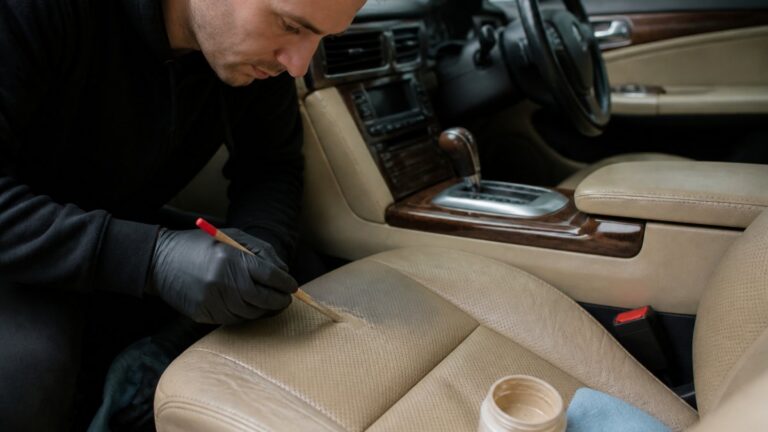
The process for a cigarette burn repair, for example, involves:
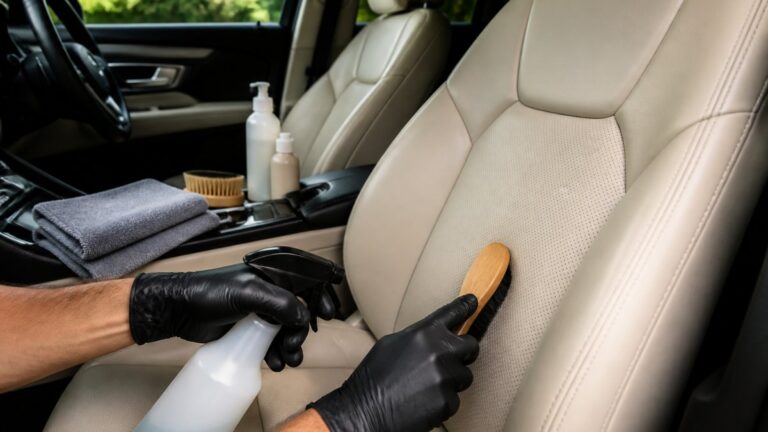
- Cleaning and preparing the damaged area
- Removing any charred or loose material
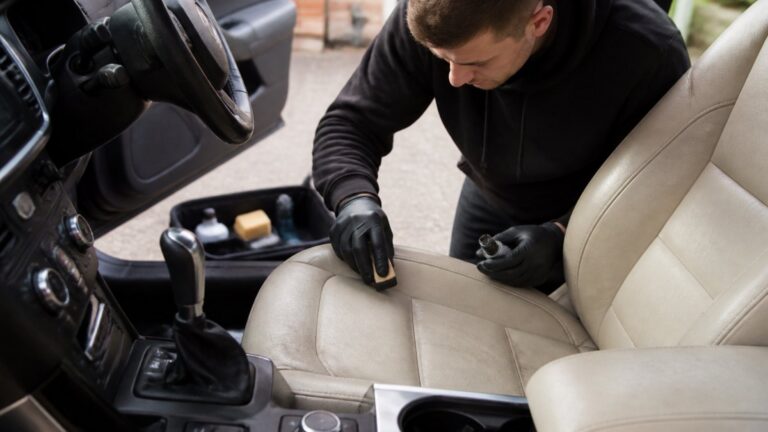
- Applying a filler compound to rebuild the surface
- Matching and applying colour to blend with the surrounding material
- Sealing and texturing to match the original grain
The actual repair might take 20 minutes; the rest is preparation and finishing, where quality shows. A rushed colour match looks patchy within weeks.
Leather and Vinyl Restoration: 1-3 Hours
Leather and vinyl restoration takes longer because it involves multiple stages that cannot be rushed. A single-seat restoration runs 1.5 to 2 hours; a full interior can take 3 to 5 hours.
The timeline breaks down roughly as follows:
- Surface preparation: 20-30 minutes (cleaning, degreasing, light sanding)
- Filler application: 15-30 minutes (building up damaged areas)
- Dye application: 30-60 minutes (multiple thin coats with drying between)
- Sealing and finishing: 20-30 minutes (protective topcoat and texture matching)
The dye used in leather restoration needs time between coats. Rushing this stage can lead to a finish that fades unevenly. Ask about curing time before you book.
Car Seat Cigarette Burn Repair Time Explained
Car seat cigarette burn repair typically takes 45 to 90 minutes per burn, depending on size and depth. Shallow surface burns on leather are faster than deep burns that have penetrated to the padding.
The repair time depends on three factors:
- Burn depth: Surface scorching takes less time than a burn that has created a crater in the material
- Material type: Leather and vinyl are generally easier to repair than fabric, which requires reweaving or patching
- Location: Burns on flat surfaces are quicker than those on contoured areas like seat bolsters
A deep burn on fabric can take longer than a leather repair because the technician may need to reweave threads for an invisible finish.
With multiple burns, expect time to scale roughly linearly: three burns on one seat might take 2 to 2.5 hours, since the technician prepares and finishes several areas in one session.
Factors That Affect How Long Mobile Car Interior Repair Takes
Several variables determine how long a mobile interior repair takes, and understanding them explains why two apparently identical jobs can differ by hours.
Damage severity and depth. A surface scuff sits in the topcoat; a torn seam with exposed foam needs structural rebuilding before colour. Each extra layer of damage adds preparation and finishing time, not just repair time.
Material type. Leather, vinyl, fabric, and alcantara each demand different techniques and products. Fabric repairs run longer because colour matching and texture blending are more complex, and reweaving threads is slower than filling a leather crater.
Colour matching requirements. Standard black and grey are straightforward. A rare tan or custom colour may require mixing dyes on-site, adding 15 to 30 minutes. Metallic or pearlescent finishes add complexity because flake orientation must be replicated.
Ambient temperature and humidity. This is the factor most owners underestimate. Dye, filler, and adhesive are chemically reactive systems, not paints that simply dry. Most products specify a working range, commonly around 15°C to 25°C, and cure times stretch significantly below that (Temperature). A technician working in a cold, damp driveway may need to extend dwell times between coats, add a follow-up visit, or decline the job rather than risk a poor finish.
Curing versus drying. These are not the same thing. Drying is solvent or water leaving the film; curing is a chemical cross-linking reaction that continues for hours or days after the surface feels dry. A leather dye may be touch-dry in 30 to 60 minutes but not fully cured for 24 hours or more, so a seat can look finished yet still be vulnerable to marking, scuffing, or dye transfer if used immediately.
Vehicle accessibility and workspace. Tight spaces, parked position, and lighting all affect efficiency. A technician under a carport or in a garage can control temperature and dust far better than one working kerbside.
Number of areas being repaired. Multiple repairs in one visit are more efficient than separate call-outs because setup, colour mixing, and curing time are shared. Total time still increases with each area, but not linearly.
Booking a repair on a cold, wet day without confirming the technician can work under cover often leads to a compromised finish. Curing time extends significantly in low temperatures, and some adhesives and dyes will not set properly below their specified threshold. Always confirm the working conditions before the visit.
Ask two questions before you book: what is the touch-dry time, and what is the full cure time? A professional should be able to answer both for the specific product they use on your material. If they can’t, that’s a signal the finish may not last.
DIY Car Interior Repair Kits vs Professional Mobile Service
DIY car interior repair kits cost less upfront, but the time investment and risk of poor results can be significant. A professional mobile service can deliver a high-quality finish efficiently, and the right choice changes dramatically by complexity tier.
Here’s how the two approaches compare across the damage types most owners actually face:
| Damage Type | DIY Kit Realistic Time | Professional Mobile Time | Key Difference |
|---|---|---|---|
| Minor scuff on dark material | 1-2 hours (plus 24-48h cure) | 30-45 minutes | DIY acceptable if colour match isn’t critical |
| Single cigarette burn | 2-4 hours, often visible result | 45-90 minutes | Filler and grain matching require practice |
| Small tear or rip | 3-6 hours, high failure risk | 1-1.5 hours | Structural repair needs correct backing and adhesive |
| Leather re-colouring (single seat) | 6-10 hours across multiple sessions | 1.5-2 hours | Colour and sheen matching is the hard part |
| Full interior leather restoration | Not realistically achievable | 3-5 hours | Requires airbrush, compressor, and product range |
DIY kits work for very minor scuffs on dark materials where a perfect match isn’t critical. They fall short on tears, burns, and any repair where colour accuracy matters, and badly on anything involving multiple panels or a visible finish.
The hidden cost of DIY is time, and it compounds. A repair that takes a professional 45 minutes might take a first-timer three hours, with a visible result. Add the 24 to 48 hours of curing most DIY products require, and a weekend job can become a week-long inconvenience. For lease vehicles or cars being prepared for sale, a visible patch can potentially impact trade-in value (Guide to maintaining roadworthiness: commercial goods and passenger carrying vehicles).
There’s also a materials gap. Professional technicians carry fillers, dyes, and topcoats matched to specific leather and vinyl types, plus an airbrush for blending. A DIY kit gives you one colour and one texture compound, often enough on a black seat, rarely on a tan or grey interior with visible grain.
If the damage is a small scuff on a dark surface and you’re not fussy about a perfect match, a DIY kit is a reasonable weekend project. For burns, tears, colour restoration, or anything on a lease or sale vehicle, the professional route can be a more efficient and reliable option.
Understanding the Cost of Car Interior Leather Repair
The cost of car interior leather repair depends on the extent of damage, the number of areas affected, and the leather or vinyl involved. Most providers quote per repair or per panel rather than by the hour.
Factors that influence pricing include:
- Number of damaged areas: A single scuff costs less than a full seat restoration
- Material type: Premium leather and exotic materials require specialist products
- Colour complexity: Custom or rare colours may carry a surcharge
- Travel distance: Mobile services may include a call-out fee based on location
- Urgency: Same-day service sometimes carries a premium
At TrimKings, we provide no-obligation quotes based on a photo of the damage. Send us a picture, and we’ll give you a clear price before you commit to anything. There’s no pressure and no hidden fees.
For fleet operators, per-vehicle pricing typically improves with volume. If you’re managing multiple vans or company cars, it’s worth discussing a maintenance schedule rather than booking individual repairs.
What to Expect on the Day of Your Mobile Repair
A mobile repair visit follows a predictable sequence: arrival, assessment, preparation, repair, and curing. Most jobs finish in a single visit, and you can carry on with your day while the technician works.
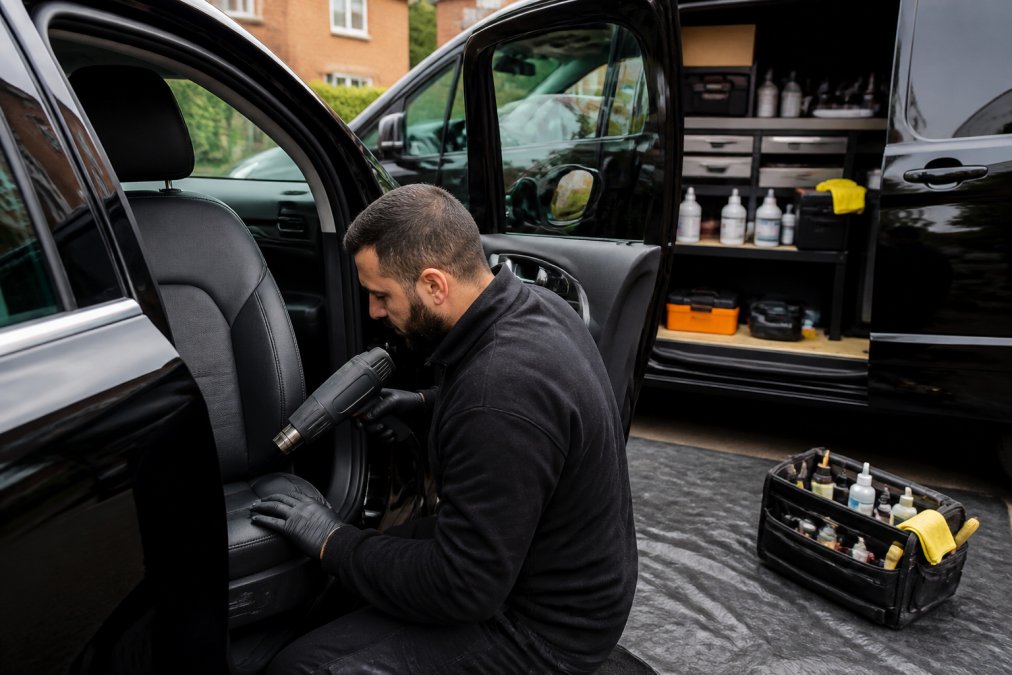
Here’s the typical flow:
- Arrival and setup (10-15 minutes). The technician parks, assesses the damage in person, and confirms the quoted price.
- Surface preparation (10-20 minutes). The damaged area is cleaned, degreased, and prepared for repair.
- Repair work (30 minutes to 3 hours). Depending on the damage type, this is where the bulk of the time goes.
- Curing and finishing (15-30 minutes). Dyes and sealers are allowed to set, and the technician does a final quality check.
- Walkthrough (5 minutes). You inspect the work and confirm you’re happy before the technician leaves.
The most important thing to confirm before booking is curing time. A repair might look finished when the technician leaves, but the material needs time to fully set. Ask how long before you can use the seat normally, and plan accordingly.
Conclusion
Interior damage doesn’t have to mean an expensive replacement or a visible patch. Whether it’s a cigarette burn, a torn seam, or worn leather on the driver’s seat, a professional mobile repair can restore the finish in a few hours without disrupting your day.
TrimKings brings the workshop to your home or workplace across the West Midlands. Our mobile technicians handle everything from minor cosmetic repairs to full leather restoration, with seamless colour matching and a finish that stands up to scrutiny. We work on everything from family cars to luxury supercars and commercial fleets.
Send us a photo of the damage for a no-obligation quote, and we’ll tell you exactly how long the repair will take and what it will cost.
Frequently Asked Questions
Can mobile car interior repairs be completed in one day?
Most mobile car interior repairs are completed in a single visit, often within 1-3 hours. Minor scuffs, tears, and cigarette burns typically take 30-60 minutes, while full leather seat restoration or dashboard repair may take 2-3 hours. Drying and curing time adds 24-48 hours before the area can be used normally, but you can drive the vehicle immediately after the technician leaves.
How long does car seat cigarette burn repair take?
Car seat cigarette burn repair time usually ranges from 45 minutes to 2 hours, depending on the size and depth of the burn and the material. A small burn on fabric or vinyl can be filled and colour-matched in under an hour. Larger burns on leather may need filler compound, dye application, and heat curing, which takes longer. The technician will assess the damage and give you a clear time estimate before starting.
Is mobile interior repair faster than taking my car to a workshop?
Mobile repair can be more convenient because there is no drop-off or collection. A workshop visit can mean leaving your car for a full day or more. With mobile service, the technician comes to your home or workplace and completes most repairs in 1-3 hours. You avoid travel time and disruption to your schedule. The actual repair time is similar, but the overall turnaround can be quicker.
What factors influence the duration of car upholstery repair?
Key factors include the type and extent of damage, the material (leather, vinyl, or fabric), colour matching requirements, and whether the damage is in a hard-to-reach area. Surface preparation and curing time also affect the total. For example, a simple scuff removal takes less time than a tear repair that needs stitching, filling, and dyeing. Complex repairs on luxury or classic vehicles may need extra care and therefore more time.
Getting your car back to its best shouldn’t mean losing it for days. TrimKings comes to you, fixes the damage properly, and gets you back on the road the same day. Get a quote today and see how straightforward professional interior repair can be.