Table of Contents
- Why Supercar Interior Restoration Matters
- Understanding the Core Areas of Car Interior Restoration
- Leather Seat Refinishing for Luxury Vehicles
- Material Selection and Sourcing for Prestige Interiors
- Prestige Car Interior Repair Cost: What to Expect
- Mobile Interior Restoration Services: Convenience and Quality
- Maintenance and Preservation Guide
- Timeline, Process Transparency, and Investment Impact
- Frequently Asked Questions
Last Updated: September 25, 2026
Why Supercar Interior Restoration Matters
Supercar ownership comes with expectations. Your vehicle represents a significant investment, and its interior should reflect that standard. When upholstery becomes worn, leather cracks, or dashboard trim sustains damage, the entire driving experience deteriorates. Beyond aesthetics, interior condition directly impacts resale value and your ability to avoid costly end-of-lease penalties.
Car interior restoration isn’t vanity, it’s asset protection. A supercar with pristine leather and flawless trim commands premium pricing. One with visible wear, cigarette burns, or torn upholstery loses thousands. For lease holders, interior damage triggers substantial charges at contract end. The difference between professional restoration and neglect often exceeds the cost of repairs themselves.
At TrimKings, we understand that your supercar’s interior deserves expert attention. Whether you’re addressing wear from daily use or preparing for lease return, professional car interior restoration transforms your vehicle and protects your investment.
Many supercar owners delay restoration thinking minor damage will worsen naturally anyway. The opposite is true, small tears spread, leather cracks deepen, and discolouration compounds. Early intervention prevents exponential deterioration and keeps repair costs manageable.
Understanding the Core Areas of Car Interior Restoration
Professional car interior restoration addresses multiple interconnected components. Each area requires different expertise, materials, and techniques. Understanding what can be restored, and how, helps you make informed decisions about your vehicle’s care.
Upholstery and Seat Repair
Supercar seats endure concentrated wear. Driver-side bolsters compress from repeated entry and exit. Passenger seats accumulate creases from infrequent use. Leather and high-end fabrics sustain damage from sharp objects, spills, and UV exposure.
Professional seat repair involves several approaches. For minor surface damage, targeted conditioning and protective treatments restore appearance without intervention. Deeper issues, rips, burns, or structural foam deterioration, require more involved work. Technicians assess seat frame integrity, replace damaged foam when necessary, and re-trim with colour-matched materials.
The key challenge in seat restoration is achieving seamless colour matching. Leather fades unevenly across years of exposure. Professional restorers use hand-blending techniques to match original hues precisely. This prevents the “patched” appearance that undermines restoration quality.
Leather Cleaning and Conditioning
Leather requires ongoing maintenance to prevent premature deterioration. Dust accumulation clogs pores. Oils from skin break down protective layers. Environmental contaminants, salt, pollution, UV rays, degrade the hide.
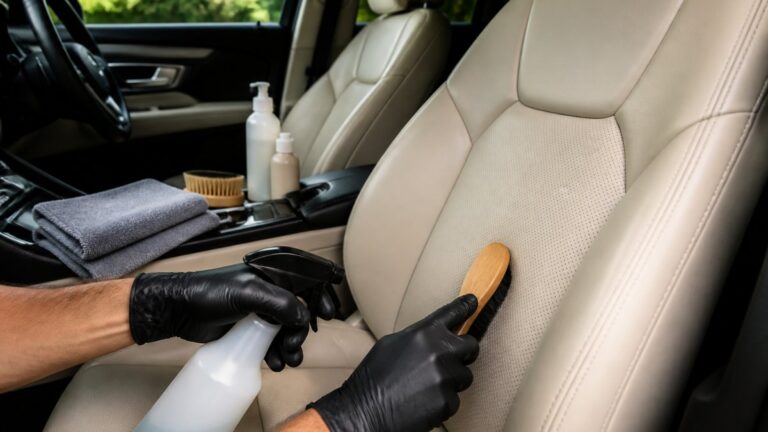
Regular cleaning removes surface debris without damaging the leather itself. Professional-grade cleaners dissolve embedded grime whilst preserving the material’s integrity. Conditioning treatments restore natural oils that prevent cracking and maintain suppleness.
Many owners attempt DIY cleaning with unsuitable products. Household cleaners strip protective coatings. Harsh abrasives scratch the surface. Professional conditioning uses formulations specifically engineered for automotive leather, restoring both appearance and durability.
Dashboard and Console Restoration
Dashboards suffer from UV damage, temperature fluctuations, and physical contact. Plastic trim fades, cracks, or becomes brittle. Leather-wrapped consoles develop creases and lose colour. Stitching detail, a hallmark of prestige vehicles, can separate or fray.
Dashboard refinishing requires careful surface preparation. Damaged areas are sanded to remove degraded material. Repairs are built up in layers, with each layer cured before proceeding. Final finishing matches the original texture and sheen, whether that’s matte, satin, or gloss.
For leather-wrapped consoles, colour matching ensures repairs blend seamlessly with surrounding material. Stitching detail is restored or replicated using period-appropriate thread and techniques.
Door Card and Panel Restoration
Door cards combine multiple materials, leather, fabric, plastic trim, and metal accents. Each component ages differently. Leather develops creases from repeated opening and closing. Fabric accumulates dust and fades. Plastic trim becomes brittle and discolours.
Professional restoration addresses each material separately. Leather panels are cleaned, conditioned, and reshaped. Fabric is carefully cleaned or replaced with colour-matched alternatives. Plastic trim is refinished or replaced to match OEM specifications. All components are reassembled to original tolerances, ensuring door cards function smoothly.
Steering Wheel Re-Trimming
The steering wheel is the most frequently touched surface in your vehicle. Leather deteriorates rapidly from hand oils, sweat, and UV exposure. Worn patches become unsightly and uncomfortable. Complete re-trimming restores both aesthetics and grip.
Professional steering wheel restoration removes the original covering carefully to preserve the underlying structure. Damaged foam is assessed and replaced if necessary. New leather is hand-stitched using traditional techniques, replicating original stitching patterns precisely.
Headliner and Carpet Refurbishment
Headliners, the fabric lining the roof, absorb moisture, dust, and cigarette smoke. They become discoloured, develop odours, and eventually sag. Professional restoration involves careful removal, cleaning or replacement, and reinstallation.
Leather Seat Refinishing for Luxury Vehicles
Leather seat refinishing represents the most visible aspect of prestige car interior repair. Luxury vehicles feature leather selected for specific characteristics, grain pattern, colour depth, durability. Restoring this material requires understanding both the original specification and the damage being addressed.
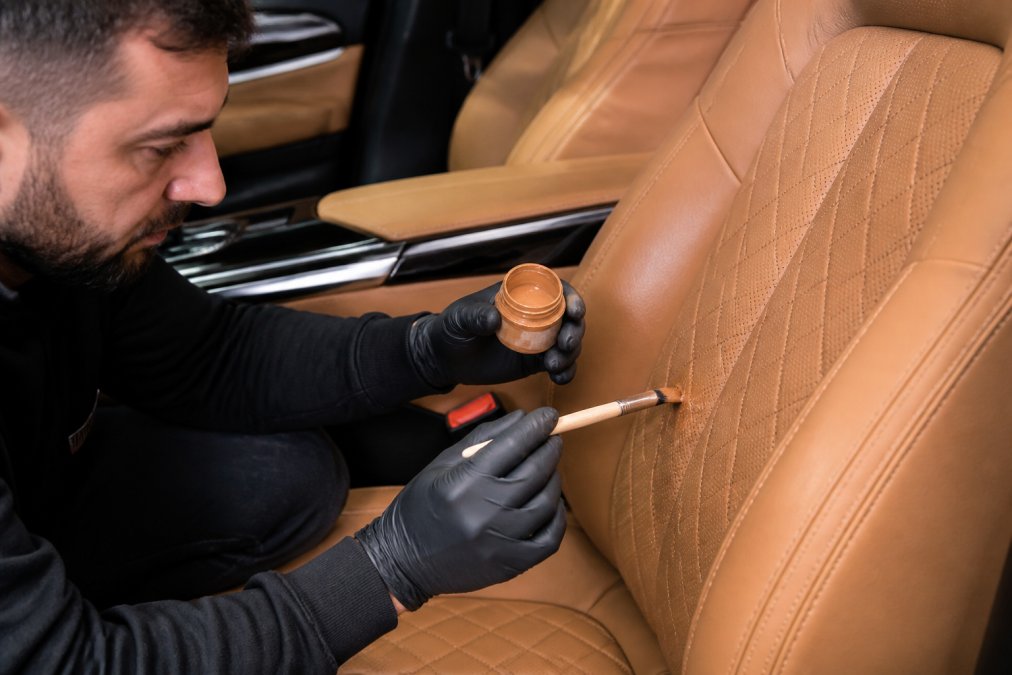
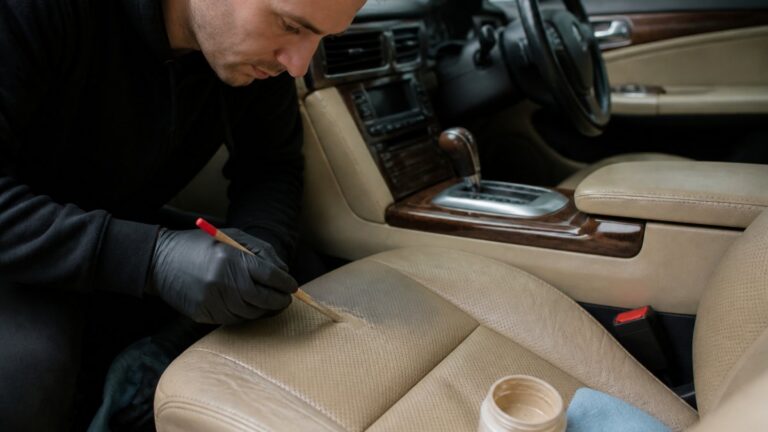
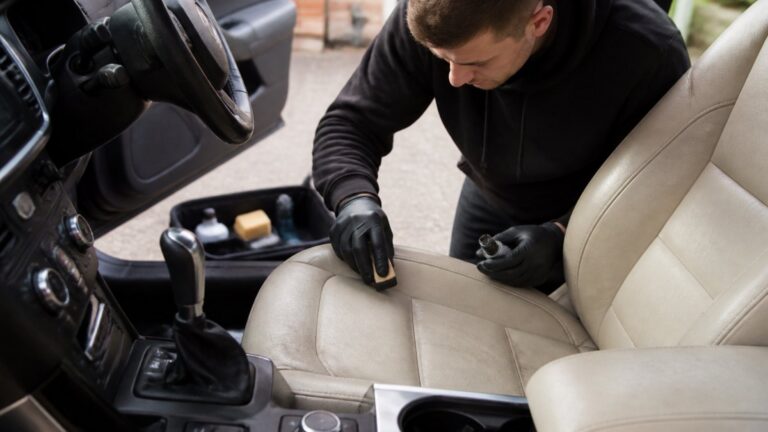
The refinishing process begins with assessment. Technicians examine the leather’s original finish, identify damage extent, and determine whether restoration or replacement is appropriate. For repairable damage, the affected area is cleaned thoroughly, any deteriorated material is removed, and new leather or repair compound is applied.
Hide selection matters significantly. Prestige vehicle manufacturers source leather with specific characteristics, grain pattern, thickness, finish type. Professional restorers maintain inventory of materials matching common specifications, ensuring repairs blend seamlessly with original upholstery.
Colour matching uses multiple techniques. Hand-blending allows technicians to account for uneven fading across the seat. Multiple coats of colour are applied and cured, building depth that matches the original finish.
The difference between adequate repair and excellent restoration lies in material sourcing and colour matching precision. Prestige vehicle interiors demand this level of detail, anything less undermines the vehicle’s value and your ownership experience.
Material Selection and Sourcing for Prestige Interiors
Choosing materials for prestige interior restoration directly impacts durability, appearance, and value retention. Understanding material options helps you make decisions aligned with your vehicle’s specifications and your priorities.
Leather quality varies substantially. Prestige vehicle restoration typically uses high-quality leather.
Colour selection involves balancing originality with personal preference. Factory colours were chosen for specific reasons, durability, light-fastness, aesthetic cohesion. Restoring original colour preserves vehicle authenticity and resale value. Custom colours offer personalisation but may reduce appeal to future buyers.
Fabric options include various materials. For luxury vehicles, natural fibres typically represent the appropriate choice.
Thread and stitching detail matter more than many owners realise. Original stitching patterns reflect craftsmanship and design intent. Professional restoration replicates these patterns using colour-matched thread and traditional hand-stitching techniques.
Prestige Car Interior Repair Cost: What to Expect
Interior restoration costs vary based on damage extent, material selection, and labour intensity. Understanding the factors influencing pricing helps you evaluate quotes and make informed decisions.
Minor repairs, small leather burns, isolated stains, minor stitching issues, typically require fewer hours and less material. Moderate damage, multiple burns, significant wear, panel deterioration, demands more extensive work. Major restoration, complete seat re-trimming, dashboard refinishing, full interior refurbishment, represents substantial investment.
Material costs depend on leather grade, fabric selection, and sourcing requirements. Factory-original materials may require specialist sourcing, increasing cost. Custom materials or premium upgrades add expense. Labour intensity reflects the technical skill required. Colour matching, stitching detail, and precision assembly demand experienced technicians, commanding appropriate rates.
Many owners find that professional restoration can be a cost-effective alternative to replacement parts. For lease holders, avoiding end-of-lease penalties through timely restoration typically delivers clear financial benefit.
TrimKings provides transparent pricing through photo-based assessment. Send images of the damage, and our team provides detailed quotes reflecting specific work required. This no-obligation approach lets you understand costs before committing to repair.
Mobile Interior Restoration Services: Convenience and Quality
Traditional interior restoration requires vehicle delivery to a workshop, time away from your schedule and potential inconvenience. Mobile restoration services bring professional work directly to your location, minimising disruption whilst maintaining quality standards.
Mobile services operate from fully equipped vehicles containing necessary tools, materials, and lighting. Technicians arrive with everything required to assess damage, perform repairs, and deliver professional results. This eliminates the need for you to arrange transport or spend time at a workshop.
Quality concerns sometimes arise around mobile work. Can technicians achieve the same results working outside a controlled environment? Professional mobile operators address this through proper equipment and quality control protocols.
The convenience factor extends beyond location.
Some mobile services prioritise speed over quality, rushing through repairs to maximise appointments per day. Professional mobile restoration takes appropriate time for each job, ensuring quality standards match workshop-based work. Verify that your chosen provider allocates sufficient time for thorough assessment and careful execution.
Maintenance and Preservation Guide
Protecting your supercar’s interior between professional restoration sessions extends the lifespan of repairs and maintains appearance. Consistent maintenance prevents minor issues from becoming major problems.
Timeline, Process Transparency, and Investment Impact
Understanding the restoration timeline and process helps you plan appropriately and set realistic expectations. Transparency around timelines and procedures distinguishes professional operators from those cutting corners.
Frequently Asked Questions
What’s the typical cost difference between car interior restoration and replacing seats entirely?
Restoration is significantly more cost-effective than replacement. The exact saving depends on your vehicle type, damage extent, and material involved. Rather than estimate figures that may not reflect current pricing, we recommend requesting a quote with photos of the damage to understand your specific situation. Most owners find restoration preserves their budget while maintaining their vehicle’s value.
How do professionals ensure colour matching on leather seat refinishing for luxury vehicles?
Professional restorers use extensive leather sample libraries to identify the precise original shade. The process involves examining the vehicle’s service history, comparing hide selection across different sections, and testing on inconspicuous areas first. Craftspeople apply multiple thin coats rather than single heavy applications, allowing for seamless blending with surrounding leather.
Can mobile interior restoration services handle fleet vehicles, or are they only for individual cars?
Mobile interior restoration services can accommodate both individual vehicles and commercial fleets. For fleet operators managing multiple vans or cars, scheduling is coordinated to minimise disruption to operations. Services come directly to your workplace, eliminating downtime at a garage. Volume requirements and timeline flexibility should be discussed during your initial consultation to ensure the service provider can meet your fleet’s specific needs.
Will professional interior restoration help avoid end-of-lease charges?
Yes, addressing interior damage before lease end inspection significantly reduces penalty charges. Lease agreements typically allow for normal wear but charge for damage beyond that threshold. Professional restoration of cigarette burns, tears, stains, and scuffs restores the interior to acceptable condition, helping you pass inspection without costly deductions. Addressing damage early in the lease period is more cost-effective than waiting until the final months.