Table of Contents
- Why Mobile Interior Repair for Luxury Vehicles Makes Sense
- What Gets Repaired: Scuffs, Burns, Holes and Wear
- Mobile Leather Seat Restoration: Colour Matching and Grain
- Luxury Car Dashboard Scuff Repair and Trim Refurbishment
- Professional Car Upholstery Repair Cost: Repair vs Replacement
- End of Lease Inspections, Insurance and Warranty Compliance
- Material-Specific Care and Sustainable Repair
- Frequently Asked Questions
Last Updated: September 28, 2026
Why Mobile Interior Repair for Luxury Vehicles Makes Sense
Mobile interior repair for luxury vehicles restores cosmetic damage to seats, dashboards, trim and upholstery at the owner’s home or workplace, removing the biggest barrier to fixing damage: the time and risk of leaving the vehicle somewhere for days.
What Gets Repaired: Scuffs, Burns, Holes and Wear
Most interior damage falls into a few categories, and almost all of it is repairable without replacing the part:
- Scuffs and abrasion on seat bolsters, door cards and steering wheels, usually caused by keys, belts or rings
- Cigarette burns in leather, vinyl and fabric, including the small pinprick type that spreads if left
- Holes and tears in upholstery, from pet claws, cargo or general wear and tear
- Cracked or faded dashboard and trim, often from UV exposure through the windscreen
- Worn stitching along seams and bolster edges
- Colour loss on high-contact areas that no longer match the rest of the interior
Ask any provider whether they re-texture the grain after filling. On luxury interiors, a colour match without a grain match is still visible under direct light, and it’s the most common reason a repair gets rejected at inspection.
Mobile Leather Seat Restoration: Colour Matching and Grain
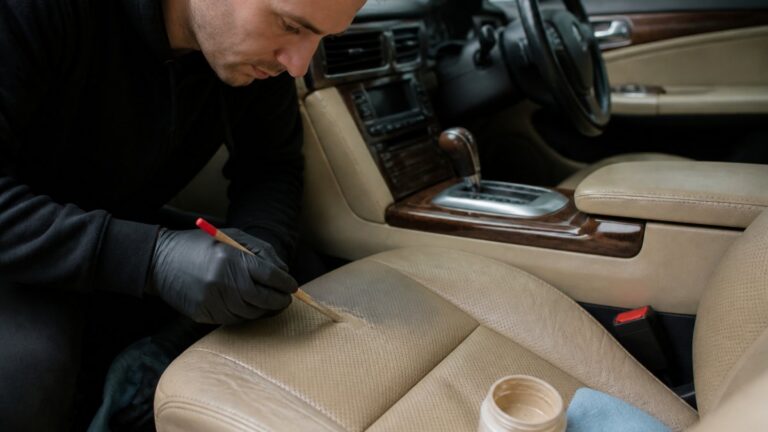
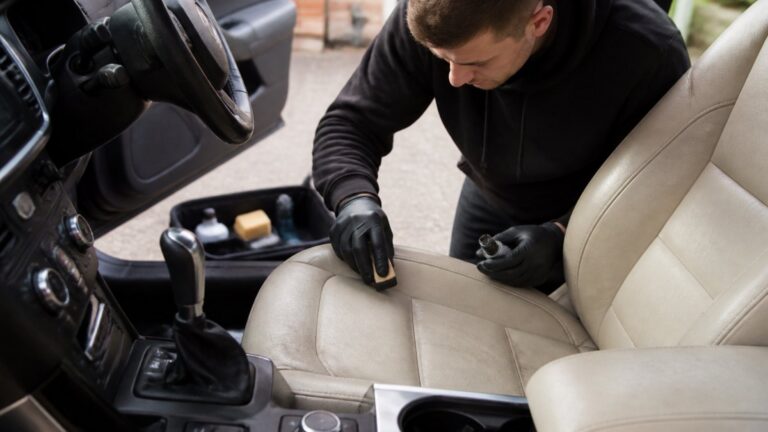
Mobile leather seat restoration rebuilds damaged leather, then dyes and refinishes it so the repaired area is indistinguishable from the original.
How Colour Matching Actually Works
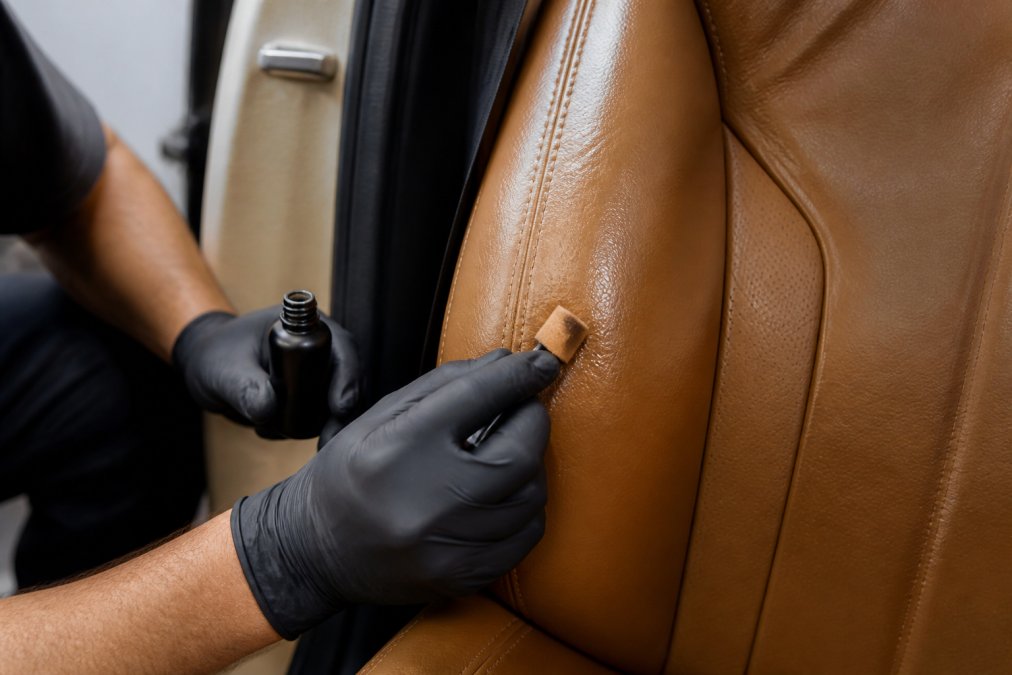
A proper match is built in layers, not mixed in one go.
- Identify the base colour code from the vehicle’s build data or by sampling an unfaded area, such as under the seat or behind a trim panel.
- Mix a base dye to that code, then adjust for the actual fade on the exposed surfaces.
- Apply in thin coats, letting each layer flash off so the tone builds gradually.
- Match the sheen with a topcoat, because a matte finish next to a satin one reads as a mismatch even when the colour is right.
- Re-texture the grain using a heat-stamped grain pad or roller that mirrors the original pattern.
- Seal and protect with a conditioner or protective coating so the repair wears at the same rate as the surrounding leather.
Luxury Car Dashboard Scuff Repair and Trim Refurbishment
Dashboard and trim damage is the repair most owners assume is impossible, yet cracked dashboards, scuffed trim and faded panels are among the most straightforward fixes a mobile technician can complete on site.
- Soft-touch dashboards are filled, re-textured and refinished to hide cracks and scuffs
- Leather-wrapped dashes and door tops are repaired like seats, with dye and grain work
- Wood veneer is polished and re-lacquered rather than dyed
- Metal trim is refinished or replaced if the damage is deep
- Piano-black and gloss panels are polished out for light scratches, refinished for deeper ones
Professional Car Upholstery Repair Cost: Repair vs Replacement
Professional car upholstery repair cost depends on the material, the size and depth of the damage, the number of panels involved, and how much colour and grain work is needed. Any provider quoting a single figure without seeing the damage is guessing.
| Factor | Repair | Replacement |
|---|---|---|
| Cost | Lower, based on damage | Higher: part plus fitting |
| Time off road | Usually same day | Often several days |
| Original material | Retained | Discarded |
| Risk of new faults | Minimal | Trim removal can introduce rattles |
| Best for | Localised damage | Structurally failed or missing trim |
What Affects the Quote You Receive
Four variables drive most quotes:
- Material: leather, vinyl, Alcantara and fabric each carry different labour and materials, and open-pore or perforated leather takes longer than a plain hide
- Damage type: a burn or hole needs filling and re-texturing; a scuff may only need refinishing
- Area: a single bolster costs less than a full seat base and back, and a full interior refresh is priced per panel
- Access and colour: unusual or faded colours take longer to match, and seats with airbag seams or heating elements need more care around the stitching
Never accept a firm price from a photo alone without confirming what it includes. A quote that excludes grain re-texturing or the protective topcoat isn’t comparable to one that includes both, and the “cheaper” option often costs more once the finish is added.
Which Repairs Actually Pay You Back Before a Sale
Not every repair returns the same value at sale or part-exchange, and the ranking is fairly consistent:
- Driver’s seat bolster and side squab: the highest-visibility wear point on any used luxury car, and the first thing a buyer or inspector touches. Repair here almost always returns more than it costs.
- Steering wheel rim wear and shine: a worn wheel makes a low-mileage car feel tired. A refinish is inexpensive relative to the impression it changes.
- Dashboard and centre console scuffs: cheap to fix, disproportionately damaging to a buyer’s first impression, because the eye lands there immediately.
- Rear bench burns or tears: lower visibility, but a common lease and inspection charge, so the payback is avoiding a penalty rather than adding value.
- Headlining sag or staining: usually a bigger job, and only worth doing if it’s the one thing dragging the interior down.
Getting a Quote You Can Compare
When you request quotes, ask each provider the same four questions so the numbers are comparable:
- Does the price include grain re-texturing and a protective topcoat?
- Is the dye mixed to the manufacturer’s colour code, or matched by eye?
- What’s the cure time before the car can be used normally?
- Is there any warranty on the repair, and what does it cover?
End of Lease Inspections, Insurance and Warranty Compliance
Interior damage is one of the most common sources of end-of-lease charges, and one of the most fixable before the inspection. A tear in the back seat or cigarette burns that would trigger a reconditioning charge can often be repaired for less than the penalty.
- Cosmetic repairs don’t affect your warranty when they restore original materials rather than replacing them with non-standard parts
- Insurance claims for interior damage are rare because the excess often exceeds the repair cost, so paying directly is usually cheaper
- Manufacturer warranties are unaffected by refinishing work, though you should always confirm with your dealer if you’re mid-term
The cheapest end-of-lease strategy is to repair damage months before the inspection, not weeks. It gives you time to get a second quote and avoids the pressure of a deadline.
Material-Specific Care and Sustainable Repair
Repair is the more sustainable option, and it’s not a marketing line. Keeping the original seat, dashboard or trim panel means no new part is manufactured, shipped or fitted, and no serviceable material goes to waste, while preserving the factory finish and originality buyers and inspectors look for.
Know Your Leather Before You Clean It
Most generic care advice fails because it treats all leather as one material. In a premium interior, it isn’t. The three finishes you’re most likely to own behave very differently:
- Aniline leather is dyed through with little or no surface pigment, so the natural grain and markings show. It’s the softest and most desirable finish, and also the most fragile: water can stain it, and most off-the-shelf conditioners will darken it or clog the pores. Clean with a barely damp cloth and a dedicated aniline-safe product, and never scrub.
- Semi-aniline leather sits in the middle. It has a light pigment coat over an aniline base, so it keeps much of the soft hand-feel while resisting marks better. It tolerates a pH-neutral cleaner and a light conditioner, but abrasive creams will wear through the thin pigment layer and leave a shiny patch.
- Nappa leather is a description of the hide’s softness and grain rather than a single finish, and it can be pigmented or semi-aniline depending on the maker. It marks easily and creases early, which is normal, but it responds well to regular conditioning because the surface is more sealed than pure aniline.
Matching the Product to the Material
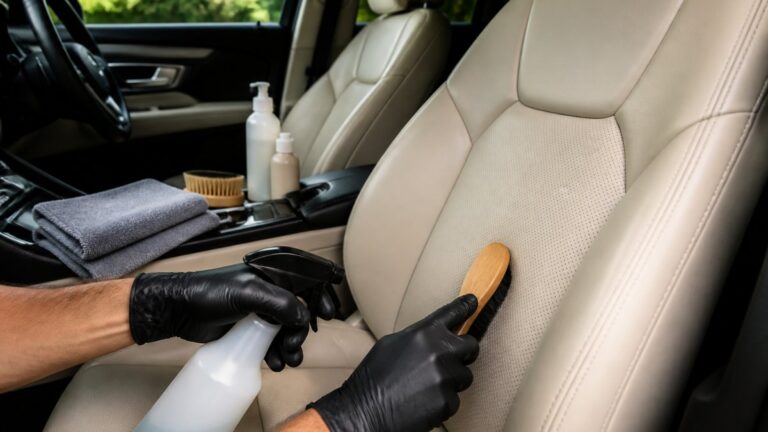
- Leather: clean with a pH-neutral cleaner, then condition every few months to prevent drying and cracking. Match the conditioner to the finish above, not to the colour.
- Vinyl: wipe with a mild cleaner and avoid solvent-based products that strip the finish.
- Alcantara and suede: brush with a soft bristle brush and spot-clean rather than soaking. A leather conditioner applied to Alcantara will ruin the nap, and it can’t be reversed.
- Fabric: vacuum regularly and treat spills immediately before they set.
- Wood and metal trim: dust with a microfibre cloth and avoid abrasive polishes, which cut through lacquer and leave dull patches on veneer.
If you’re unsure which finish you have, test any product on a hidden area first, such as under the seat or behind a trim panel. Aniline leather will absorb a drop of water and darken; coated leather will bead it on the surface.
Why Repair Beats Replacement on Sustainability and Originality
A replacement seat cover or dashboard panel carries the manufacturing footprint of a new part, its shipping, and the disposal of the original. A repair keeps that material in service and avoids the trim removal that introduces rattles and squeaks. For classic car restoration the same logic applies with more caution: original materials are often irreplaceable, so repair and conservation beat replacement almost every time.
Frequently Asked Questions
Can luxury car leather seats be repaired without replacement?
In most cases, yes. Mobile interior repair for luxury vehicles targets the damaged area rather than the whole seat, so scuffs, burns, cracks and bolster wear can be refinished, dyed and re-grained to match the surrounding leather. Replacement is only necessary when the hide is torn through or the foam underneath has collapsed. A technician assesses this from photos before quoting, which avoids unnecessary expense.
How do professionals match leather colours for luxury car interiors?
Technicians mix pigments to the exact shade of your interior, then test the blend on a hidden area before applying it. Modern colour matching accounts for fading, so the repair blends with the seat as it looks now rather than the factory colour. After dyeing, a grain stamp recreates the original texture and a protective top coat seals it, which is why a good mobile leather seat restoration is hard to spot.
Is mobile interior repair cost-effective compared to dealership replacements?
Repair almost always costs less than replacement because you keep the original seat, dashboard or trim. A dealership typically quotes for a new part plus labour, while a mobile service repairs the existing material on site. For lease holders, the bigger saving is avoiding end-of-lease penalty charges for interior damage. Send a photo of the damage for a no-obligation quote and a clear comparison.
Does mobile interior repair affect the resale value of a luxury car?
A professional repair protects resale value by removing the visible damage a buyer would use to negotiate down. Untreated scuffs, burns and worn bolsters signal neglect, especially on a luxury vehicle where interior condition carries weight. A properly colour-matched repair leaves no obvious trace, so the car presents better at sale or part-exchange. Keep the invoice as evidence of professional work.