Table of Contents
- What Car Interior Restoration Services Cover
- Car Interior Repair Cost: What Changes Your Quote
- Repair Versus Replacement: Making the Right Choice
- Car Dashboard Scratch Repair: Restoring Trim and Plastic
- Leather Car Seat Repair Cost and Restoration Options
- Lease Return Interior Damage Repair: Avoiding End-of-Lease Charges
- How to Assess a Repair Provider and Verify Workmanship
- Conclusion
- Frequently Asked Questions
Last Updated: October 7, 2026
What Car Interior Restoration Services Cover
Car interior restoration spans far more than a quick clean. At TrimKings, we handle everything from leather refinishing to plastic trim repair, restoring almost any cosmetic interior damage without expensive replacement parts.
The three main categories are leather and upholstery repair, plastic and vinyl restoration, and carpet or fabric work. Each uses different techniques, but all preserve your interior’s look and value.
Leather seat repair and restoration
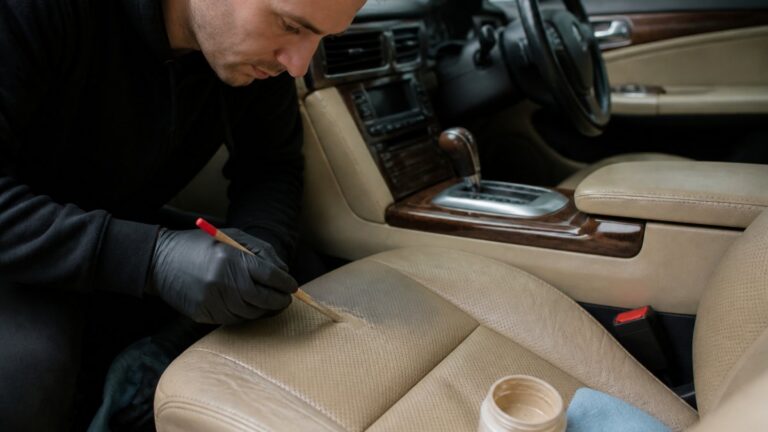
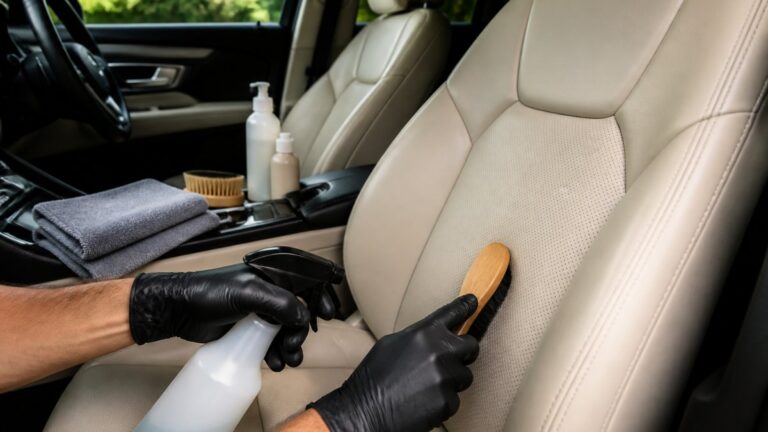
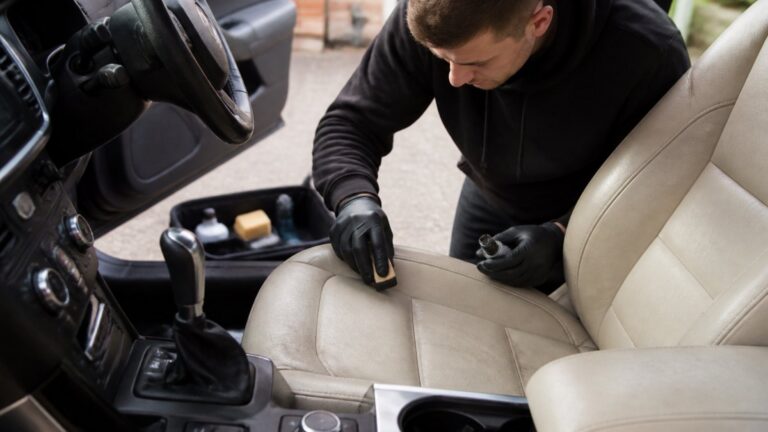
Leather seats take a beating over time. Cracks, fading, and surface damage are common but entirely fixable without replacing the seat, through cleaning, conditioning, and colour-matching.
The process includes assessing damage depth, preparing the surface, applying specialised leather repair compounds, and finishing with protective coatings. Light scratches are straightforward; deeper cracks or burns require gradually building up the leather to match the surrounding area.
Colour matching is crucial: leather fades unevenly with sun exposure, so a patch that looks perfect in the workshop might stand out in your car. Professional services use advanced colour-matching systems to blend the repair with the surrounding leather.
Fabric and upholstery repair
Fabric seats require a different approach. Tears, burns, and stains are common, and often easier to repair than leather because fabric can be stitched or patched.
Small tears are usually stitched. For burns or larger damage, a patch is applied underneath and stitched or bonded to the surface, with colour and texture matched as closely as possible.
Stains sometimes lift with specialised cleaning, but set-in stains may need dye work or patching. Address damage early before it becomes permanent.
Plastic, vinyl, and trim repair
Dashboard scratches, cracked trim, and scuffed plastic are among the most visible interior damage, ranging from simple scratch removal to full refinishing or panel replacement.
Plastic and vinyl repair involves sanding, filling cracks or gouges, colour matching, and applying a protective finish. Deeper damage may need section replacement, but modern colour-matching means replacements blend seamlessly.
Cigarette burns in plastic are common and usually repairable unless extremely deep: the burn is sanded back, filled, and refinished to match the surrounding plastic.
Car Interior Repair Cost: What Changes Your Quote
Interior restoration pricing depends on factors affecting time and materials. Understanding them explains why two quotes for similar-sounding damage can differ significantly.
The cost of car interior restoration varies with what’s repaired, damage severity, and whether colour matching is required. A small dashboard scuff costs far less than a large leather seat tear, but other factors matter equally.
Damage type and severity
Damage type shapes the approach and cost. A surface scratch needs only cleaning and refinishing; a deep gouge needs filling, sanding, and colour matching; a burn may need material replacement, raising labour and material costs.
Severity also determines whether repair is viable. Minor damage is almost always repairable; extensive burns, multiple deep tears, or structural seat frame damage may push costs toward replacement, making the repair versus replacement decision critical.
Material and colour matching
Material affects cost significantly. Leather repairs cost more than fabric because they need specialised conditioning and colour-matching compounds; vinyl and plastic fall in between.
Colour matching is a precision service that costs extra. Matching a faded leather seat requires custom dyes tested on scrap material first; matching a fabric tear means sourcing or creating a patch that blends perfectly. The more complex the colour or texture, the higher the cost.
Vehicle type and accessibility
Some vehicles are harder to work on than others. A compact car with simple seats is faster than a luxury vehicle with complex leather panels or integrated electronics, and fleet vehicles are quicker than bespoke classic cars.
Accessibility matters too: an easily removed seat is faster to repair, while tight corners or components that must be removed first increase labour time. Mobile services like TrimKings adapt to your vehicle’s layout at your location.
Repair Versus Replacement: Making the Right Choice
The repair-or-replace decision is financial and practical. Neither choice is universally correct; it depends on your situation, budget, and how much you value your vehicle.
When repair makes financial sense
Repair is right in most cases: it costs a fraction of replacement, and modern techniques rival new parts. If your leather seats have surface cracks but sound structure, repair restores them to near-original condition cheaply.
Repair also makes sense for isolated damage. A single cigarette burn, small tear, or dashboard scratch doesn’t justify replacing an entire component; targeted repair preserves value and function without the expense of removal and replacement.
For lease vehicles, repair is almost always better. Dealerships charge substantial fees for interior damage at lease end, and repair costs are far lower. Addressing damage before inspection saves money and stress.
When replacement becomes necessary
Replacement is necessary when damage is too extensive to repair cost-effectively. Multiple large tears, severe fading across the surface, or structural damage may make replacement cheaper than multiple repairs.
Replacement also makes sense if the component is already failing: a seat with broken mechanisms, failing electrics, or structural damage may cost more to repair comprehensively than to replace with a new or refurbished unit.
If the interior is already dated or worn in several areas, comprehensive replacement may be worth considering: repairing one seat while others look worn creates an inconsistent interior, and a full refresh can beat piecemeal repairs on cost.
Car Dashboard Scratch Repair: Restoring Trim and Plastic
Dashboard scratches are among the most visible interior damage and among the easiest to repair. A scratched dashboard draws attention every time you glance at the instrument panel, making repair worthwhile even for minor damage.
Plastic and vinyl dashboard repair is straightforward. The technician assesses scratch depth: surface scratches are superficial and respond to polishing and refinishing, while gouges penetrate the material and require sanding, filling, and colour matching.
Repair preserves the original dashboard, keeping costs down and maintaining the interior’s character. Colour matching is critical because dashboard texture and shading vary across the surface, and a mismatch is obvious.
Leather Car Seat Repair Cost and Restoration Options
Leather seats are a premium feature, and keeping them in good condition preserves comfort and vehicle value.
Common leather damage includes age and sun cracks, scuffs, cigarette burns, and UV fading. Each needs a different approach, but all are repairable without replacing the seat.
Crack repair involves cleaning the area, applying flexible compounds that move with the material, and colour matching.
Scuff repair is simpler: clean the area, remove loose material, and refinish with matching dye and protective coating, restoring appearance without structural repair.
Colour fading across an entire seat is more challenging. Tinted protective coatings can darken faded areas, though perfect uniformity takes skill and time.
Lease Return Interior Damage Repair: Avoiding End-of-Lease Charges
Lease agreements set interior condition standards, and dealerships assess your vehicle against them at lease end. Damage beyond normal wear and tear brings charges from modest to substantial, so repairing before inspection is far cheaper than paying penalties.
Common damage covered in lease inspections
Dealerships expect normal wear but charge for damage beyond it. Cigarette burns, large tears, stubborn stains, deep plastic trim scratches, and cracked leather are common lease-end charges.
Cigarette burns are among the most common lease-end charges because they’re visible, permanent, and clearly indicate use rather than wear.
Large tears in fabric or leather seats are also heavily charged because they require professional repair or replacement. A tear that’s just started spreading is cheaper to repair now than to charge for at lease end.
Stains that resist standard cleaning are treated as damage. Specialised cleaning sometimes helps, but set-in leather and fabric stains often need dye work or patching, which becomes a lease-end charge.
What repair standards dealerships expect
Dealerships use a “normal wear and tear” standard that varies slightly by company but is consistent in principle: the interior should be clean and free from damage affecting appearance or function, with no large tears, burns, stains, cracked or missing trim, or damage beyond light surface wear.
Repairing to this standard before lease end is most cost-effective: a professional repair restoring the component to near-original condition passes inspection without charges, and costs almost always less than the penalty.
How to Assess a Repair Provider and Verify Workmanship
Choosing the right provider is critical because poor workmanship is immediately visible and hard to correct. Before booking, verify the provider has the skills, equipment, and attention to detail to pass inspection or meet your standards.
Colour matching accuracy and finish quality
The most reliable way to assess a provider is to ask for examples of previous work: before-and-after photos on similar materials and damage types. A confident provider will have a portfolio.
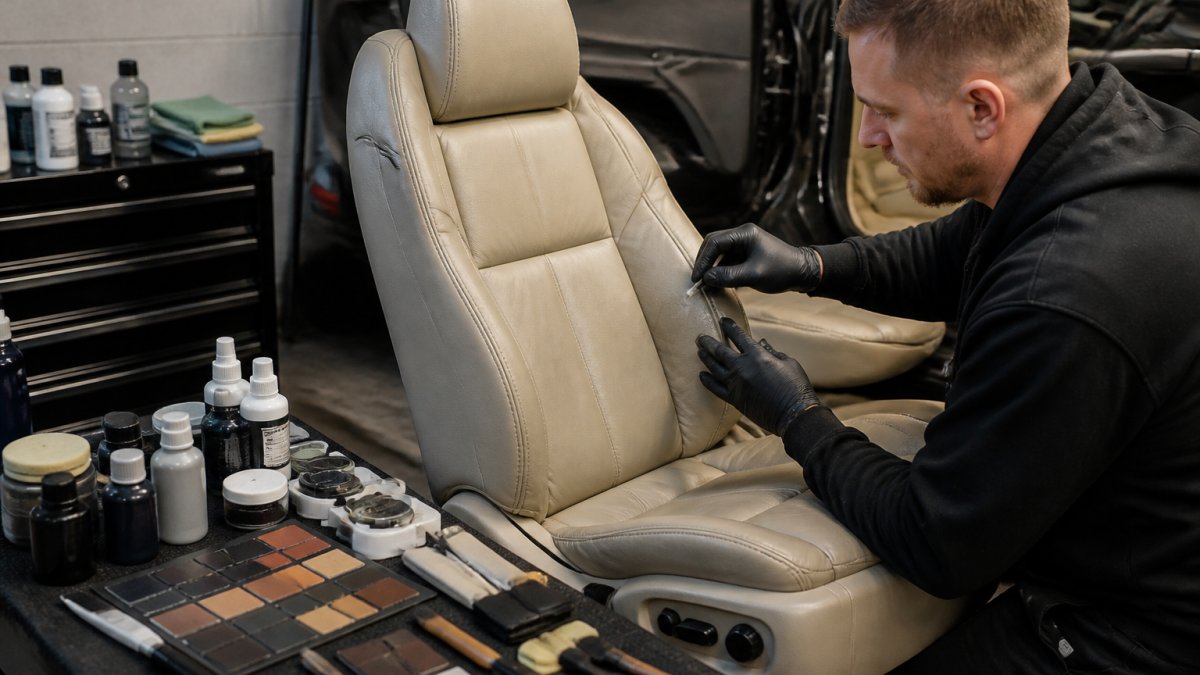
Look closely at the colour match: does the repair blend seamlessly, or is there a visible difference in tone or texture?
Ask about the colour-matching process. Professionals use spectrophotometers or similar tools to measure the surrounding material’s exact colour; those estimating by eye or using generic dyes are less reliable.
Finish quality is equally important. Does the repaired area have a smooth, even finish that matches the surrounding material? Or does it look rough, uneven, or different in texture?
Warranty, durability, and aftercare
A provider who stands behind their work offers a warranty. This might cover colour matching, durability, or both.
Ask about durability expectations. How long will the repair last under normal use? What factors might affect longevity? A provider who can answer these questions clearly has experience and confidence in their methods.
Aftercare instructions matter too. Some repairs require specific care to maintain quality, for example, leather repairs may need conditioning at intervals, or fabric repairs may need gentle cleaning to avoid damaging the patch.
For lease vehicles, verify that the provider understands dealership inspection standards. Ask whether they’ve worked with lease companies before and whether they can confirm that their repairs typically pass inspection without additional charges.
Conclusion
Interior damage doesn’t require expensive replacement parts. Professional repair restores your vehicle to a high standard at a fraction of the cost, whether you’re addressing a cigarette burn before a lease inspection, fixing a cracked leather seat, or removing dashboard scratches.
The key is choosing a provider who can deliver precise colour matching and durable results. At TrimKings, we specialise in mobile car interior restoration across all vehicle types, from family cars to supercars and commercial fleets. We assess damage accurately, provide competitive quotes with no obligation, and restore your interior with the precision and attention to detail that makes repairs pass inspection and preserve vehicle value.
Frequently Asked Questions
How much does it cost to restore a leather car seat in the UK?
Leather car seat repair cost depends on damage severity, seat size, colour matching complexity, and material condition. Minor scuffs and small burns cost less than extensive tears or complete reconditioning. Factors like custom dye blending and protective finish application also affect the final quote. Contact a provider directly with photos of the damage for an accurate estimate tailored to your vehicle.
Can scratched plastic dashboard trim be repaired before a lease inspection?
Yes. Most scratched plastic dashboard trim can be repaired through polishing, refinishing, or colour-matched restoration. The repair quality depends on scratch depth and the technician’s skill at matching the original finish. Professional mobile services can assess the damage via photo and advise whether repair will meet dealership standards for lease return. This approach typically costs significantly less than replacing dashboard components.
Is repairing a damaged car interior cheaper than replacing the parts?
In most cases, repair is more cost-effective than replacement. Replacement seats, upholstery panels, or trim components involve parts costs, labour, and vehicle downtime. Professional restoration services address the specific damage without removing or replacing entire components. However, severe structural damage or extensive wear across multiple areas may make replacement the better option. A damage assessment helps determine which approach saves money for your situation.
How long does a mobile car interior repair usually take?
Mobile repair turnaround varies by damage type and extent. Minor repairs like small burns or scuffs can be completed in 1-3 hours. Larger restoration work, such as extensive leather reconditioning or multiple upholstery repairs, may take a full day or require multiple visits. Mobile services come to your home or workplace, minimising disruption. Confirm the expected timeline with your provider based on your specific damage before booking.