Last Updated: October 25, 2026
Quick Summary
Car upholstery repair addresses damage like tears, burns, and scuffs without replacing entire panels, saving money compared to full replacement. Professional car upholstery repair can restore cigarette burns, leather damage, and dashboard scratches to look original while costing a fraction of replacement.
- Cigarette burns and single tears are repair candidates costing far less than seat replacement.
- Colour matching is critical to invisible repairs and requires experience with automotive upholstery.
- Lease vehicle holders should repair damage before return to avoid dealership end-of-lease charges.
- Repair is faster than replacement, often completed in days rather than weeks.
- Ask specialists about their colour matching process, experience with your vehicle type, and guarantees before booking.
Table of Contents
- Why Car Upholstery Repair Makes Financial Sense
- Cigarette Burn Repair on Car Seats
- Leather Car Seat Repair and Refinishing
- Dashboard Scratch Repair and Interior Trim Restoration
- Car Seat Retrimming and Headliner Repair
- Repair Versus Replacement: What the Numbers Tell You
- How to Choose the Right Upholstery Specialist
- Getting Your Quote and Booking a Repair
- Frequently Asked Questions
Why Car Upholstery Repair Makes Financial Sense
Car upholstery damage doesn’t have to mean expensive replacement. A torn seat, cigarette burn, or scuffed dashboard can be restored without replacing entire panels or reupholstering whole sections. Most vehicle owners don’t realise how cost-effective targeted repair actually is compared to the alternatives.
The real issue is that many people assume damage means replacement. It rarely does. A professional can assess the damage, match materials and colours precisely, and restore your vehicle’s interior to a high standard. This approach saves time, money, and the disruption of having your car out of action for days.
Whether you’re protecting your lease vehicle from end-of-lease charges, maintaining a luxury car’s resale value, or keeping a commercial fleet looking professional, car upholstery repair delivers measurable financial benefit. Below, we’ll walk you through seven common repairs that save money and show you how to choose the right specialist.
Cigarette Burn Repair on Car Seats
Cigarette burns in car seats are among the most common damage we see. They’re also some of the easiest to fix without full reupholstery.
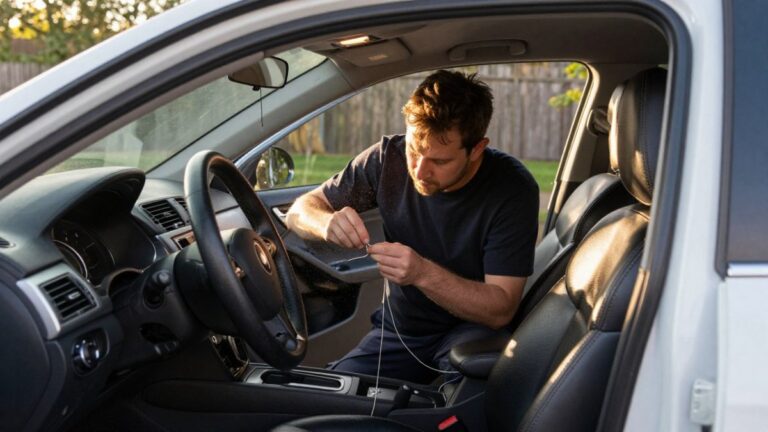
A cigarette burn creates a small, localised hole with singed edges. The repair depends on the fabric type and burn depth. For minor surface burns on fabric seats, a skilled technician can blend the damaged area using colour-matched adhesive and fibre infill.
Leather seats require different handling. Heat damage to leather can’t be undone, but the area can be carefully cleaned, treated, and colour-matched to blend seamlessly with the surrounding leather.
The key to a successful cigarette burn repair is matching the original material and colour exactly. This is where professional expertise matters. A technician will assess the fabric weave, the leather grain, and the exact colour shade before beginning work.
Turnaround time for a cigarette burn repair can be fast. For lease vehicle holders approaching the end of their agreement, this speed matters. A dealership inspection can flag even small burns as damage requiring a charge. Professional repair prevents that.
You can learn how to fix cigarette burns in car seats with fabric adhesive and fibre matching to understand the DIY options, or book a professional repair to guarantee results.
Leather Car Seat Repair and Refinishing
Leather upholstery in luxury vehicles demands specialist attention. Leather is more forgiving than fabric in some ways, small scuffs and colour fading can be addressed without structural repair, but it’s also more visible when damage occurs.
Common leather damage includes scuffs, colour loss, cracks, and peeling. Each requires a different approach. Scuffs on the surface can often be blended and colour-matched.
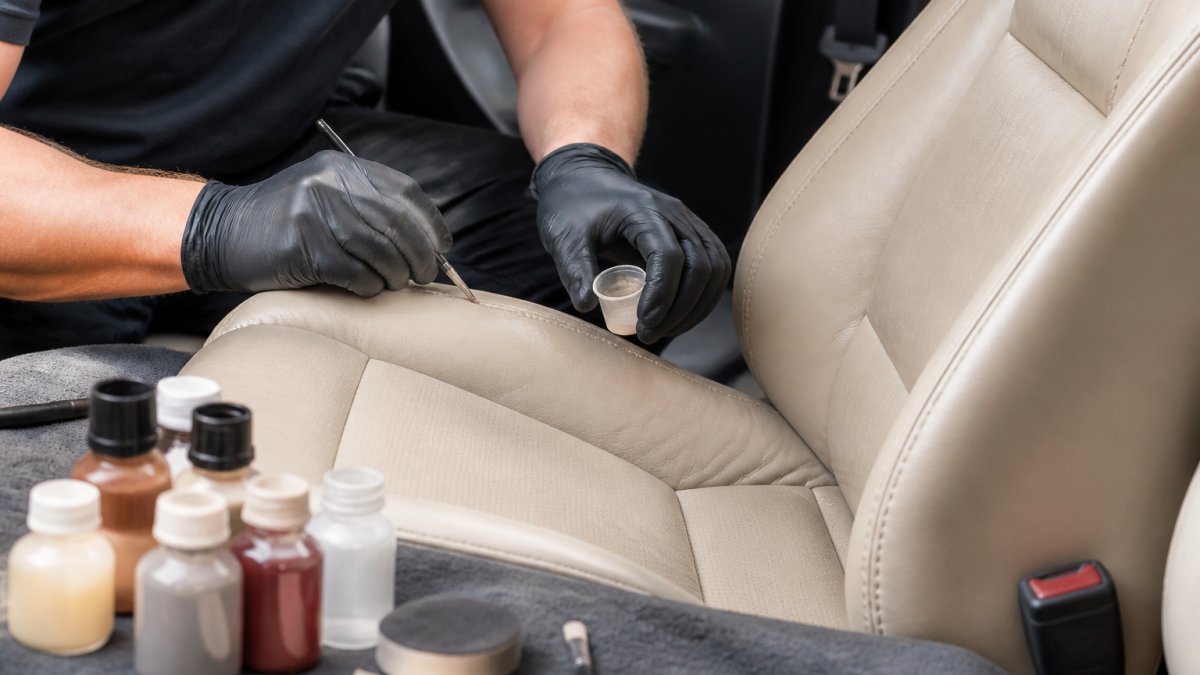
The refinishing process involves cleaning the leather thoroughly, assessing the damage depth, applying appropriate treatments, and matching the colour and sheen to the rest of the seat. This is painstaking work.
Leather repair costs less than replacing a leather seat, which can run into thousands of pounds depending on the vehicle. The exact saving depends on the damage extent and the seat size, but repair typically costs a fraction of replacement.
One critical question we hear: how long does a repair last? Professional leather repair, when done correctly, can be durable. The key is using automotive-grade materials and techniques.
You can check the cost of leather car seat restoration to understand the pricing difference between repair and replacement options.
Dashboard Scratch Repair and Interior Trim Restoration
Dashboard scratches are visible every time you get in the vehicle. They range from light surface marks to deep gouges that expose the material underneath.
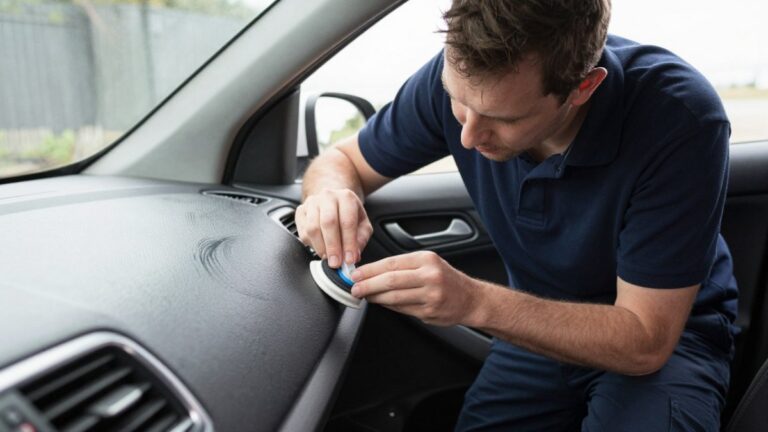
The repair approach depends on the scratch depth and the dashboard material. Most modern dashboards are either soft-touch plastic or hard plastic with a textured finish. A light scratch on a soft-touch surface can sometimes be buffed and blended. Deeper scratches require filling, sanding, and refinishing to match the original texture and colour.
Hard plastic dashboards are trickier. A deep scratch exposes the lighter material underneath, making the damage obvious. Repair involves filling the scratch with a colour-matched filler, sanding it smooth, and applying a finish that matches the original sheen.
Interior trim, door panels, centre consoles, and trim pieces, can be repaired using similar techniques. Scuffs, scratches, and small dents can all be addressed without replacing the entire panel.
The advantage of repairing rather than replacing dashboard or trim is cost and convenience. Replacing a dashboard typically requires removing the entire dashboard assembly, which is labour-intensive and time-consuming. A repair technician can address the damage in place, often in a single visit.
Explore how to fix car dashboard scratches with a step-by-step guide covering assessment and professional help options.
Car Seat Retrimming and Headliner Repair
Retrimming a car seat means recovering it with new fabric or leather. This is different from repairing damage, it’s a full restoration of the seat’s outer covering.
Retrimming is appropriate when damage is too extensive for spot repair, or when you want to change the appearance of the interior. A worn seat with multiple damage points, fading, or staining might be a candidate for retrimming.
Colour matching during retrimming is important if you want the new seat to match the rest of the interior. A skilled upholsterer can source materials that match your vehicle’s original spec or choose a complementary colour if you prefer a custom look.
Headliner repair addresses the fabric that lines the roof of your vehicle. Headliner damage typically shows as sagging, staining, or tears. Minor stains can be cleaned.
Headliner repair is more complex than seat repair because access is limited and the work is overhead. A technician needs to remove any fixtures, work from awkward angles, and ensure the new material is secured properly. Turnaround time for headliner replacement can be longer.
The cost of headliner repair or replacement depends on the vehicle size and the extent of damage. Partial repairs are less expensive than full replacement. A professional assessment will clarify which option suits your situation.
Repair Versus Replacement: What the Numbers Tell You
The fundamental question is straightforward: when does repair make sense, and when should you replace?
Repair is the right choice when damage is localised and the underlying structure is sound. A cigarette burn, a tear, a scuff, or a small stain, these are repair candidates.
Replacement becomes necessary when damage is extensive, affecting multiple areas or the structural integrity of the seat or panel. If a seat is worn across the entire surface, faded throughout, or the foam underneath is damaged, replacement might be the only option.
For lease vehicle holders, repair is almost always the better option. A dealership charges for damage at the end of the lease. The charge can be substantial.
For owners keeping their vehicles long-term, repair extends the life of the interior and maintains the car’s condition. Regular repairs prevent small damage from becoming large problems. A single cigarette burn, left unaddressed, can spread if the seat is used heavily.
The comparison is straightforward: repair costs less upfront, takes less time, and causes less disruption. Replacement is more expensive, takes longer, and requires the vehicle to be out of action. Choose repair unless the damage is truly extensive.
Here are the common situations where repair or replacement makes the most financial and practical sense.
| Damage Type | Best Choice | Reason |
|---|---|---|
| Cigarette burn | Repair | Localised damage, fraction of replacement cost |
| Single tear or scuff | Repair | Localised damage, quick turnaround |
| Small stain | Repair | Localised damage, minimal cost |
| Extensive wear across entire seat | Replacement | Damage too widespread for spot repair |
| Fading throughout seat | Replacement | Structural integrity compromised |
| Damaged foam underneath | Replacement | Underlying structure unsound |
| Multiple dashboard cracks | Replacement | Extensive damage, more cost-effective |
| Lease vehicle with any damage | Repair | Prevents dealership end-of-lease charges |
How to Choose the Right Upholstery Specialist
Finding the right specialist matters because quality varies dramatically. A poor repair is often worse than the original damage, it draws attention and looks unprofessional.
Start by asking specific questions about their process and experience. How do they match colour? Do they have photos of previous work? What materials do they use?
Check their experience with your vehicle type. Repairing a luxury supercars interior is different from repairing a family saloon. A technician experienced with your vehicle type can deliver good results.
Ask about their approach to colour matching. This is the most visible part of the repair. Do they use samples from your specific seat?
Request references or photos of completed work. A reputable specialist will have examples to show. Look for repairs that blend seamlessly with the original material.
Understand their timeline. A rushed repair is a poor repair. Proper work takes time.
Ask about guarantees. A specialist confident in their work will stand behind it. If the colour fades or the repair fails within a reasonable timeframe, will they address it at no cost?
TrimKings offers mobile car seat repair services that come to your home or workplace, eliminating the need to drop your vehicle at a garage.
Access information about mobile car seat repair services to understand how professional repair works and what to expect.
Getting Your Quote and Booking a Repair
The process is straightforward. Most specialists, including TrimKings, will assess damage from a photo and provide a no-obligation quote.
Send a clear photo of the damage taken in good lighting. Show the damage from multiple angles if it’s complex. Include the vehicle make, model, and year, and describe the material (leather, fabric, vinyl).
A professional quote should break down the cost by repair type and material. It should also include a timeline, how long the repair will take and when you can expect the work to be completed.
Once you’ve received quotes from multiple specialists, compare not just price but also the technician’s experience, their approach to colour matching, and their turnaround time.
Book the repair at a time that suits your schedule. If you’re using a mobile service, the technician comes to you, at home, at work, or at a location of your choice.
Book a car interior repair service to get started with a professional assessment and quote.
Before booking, confirm the following with your specialist:
- Exact cost and what’s included
- Timeline for completion
- Materials being used
- Colour matching process
- Guarantee or warranty on the work
- Cancellation or rescheduling policy
A specialist who answers these questions clearly and confidently is one you can trust.
Professional car upholstery repair saves money, time, and disruption compared to replacement. Whether you’re addressing a cigarette burn, restoring leather seats, or repairing a dashboard scratch, the right specialist delivers results that look original and last.
Frequently Asked Questions
Can cigarette burns in car seats be repaired without replacing the entire seat?
Yes. Small to medium cigarette burns can be repaired professionally by removing the damaged material, applying filler, and refinishing the area to match the surrounding upholstery. The repair is far cheaper than seat replacement and, when done by a skilled technician, blends seamlessly. Larger or multiple burns may require seat retrimming, but even that costs considerably less than a new seat.
How much does car seat retrimming typically cost compared to buying new seats?
Retrimming costs depend on the seat size, material type, and extent of damage, but it generally costs a fraction of replacement seats. Contact a specialist for a no-obligation quote based on your specific vehicle and damage.
How long does professional car upholstery repair usually take?
Most repairs vary in duration depending on complexity. Minor burns and small tears can be completed quickly. Larger restoration work, headliner repair, or full seat retrimming may take longer. Many specialists offer mobile service, bringing the work to your home or workplace to minimise disruption to your schedule.
What questions should I ask before booking a car upholstery repair?
Ask about colour-matching guarantees, turnaround time, whether they offer mobile service, what materials they use, and for examples of previous work. Request a detailed quote in writing, confirm it’s no-obligation, and ask whether the repair includes a warranty. For lease vehicles, ask whether the repair will satisfy end-of-lease inspections.