Last Updated: November 21, 2026
Quick Summary
Loose pet hair that vacuums off easily is generally treated as normal use and is usually not chargeable. Pet hair ground into the fabric, combined with odour, staining or physical damage, is more likely to be treated as excessive wear and tear by a lessor.
- Loose hair that vacuums off with normal cleaning is usually not chargeable.
- Embedded hair may need professional cleaning and is often treated as excessive.
- Lingering odour is frequently treated as damage, especially if it remains after cleaning.
- Keep receipts and dated photos, since a disputed charge will require proof of the car’s condition.
- Request an itemised breakdown of any charge and compare it to the lessor’s fair wear and tear guidelines.
Table of Contents
- Does Pet Hair Count as Excessive Wear and Tear on a Lease?
- Fair Wear and Tear: What the Car Lease Fair Wear and Tear Guidelines Cover
- Loose Pet Hair, Embedded Hair, Odour and Stains: Where the Line Falls
- How to Remove Pet Hair From Car Upholstery Before Return
- Lease Return Inspection Checklist for Pet Owners
- Disputing Lease-End Damage Charges Over Pet Hair and Odour
- Booking Mobile Interior Restoration Before Your Lease Ends
- Frequently Asked Questions
If you have a dog or cat, you have probably wondered whether the hair on your car seats will cost you at lease end. Pet hair is rarely a dealbreaker on its own, but how it sits in the upholstery, and what it leaves behind, can push a charge into the chargeable column.
Does Pet Hair Count as Excessive Wear and Tear on a Lease?
Loose pet hair that vacuums off easily is generally treated as normal use. Hair that is ground into the fabric, combined with odour, staining or physical damage, is more likely to be treated as excessive wear. The difference matters because lessors can usually only recover the cost of putting the car back into a condition they could reasonably expect at the end of the lease.
Watch out: Cleaning the car yourself does not remove the question. Keep your receipts and dated photos, because a lessor who disputes a charge will want to see what the car looked like on the day you returned it.
Fair Wear and Tear: What the Car Lease Fair Wear and Tear Guidelines Cover
Fair wear and tear is the everyday deterioration that comes from using a car as intended. Small marks on the seats, light fading and minor scuffs usually fall into this category. Problems start when the damage goes beyond ordinary use, such as a burn, a deep tear or a stain that has set into the material.
Many lessors use a published set of car lease fair wear and tear guidelines to decide what they will charge for. Before you sign, ask for the guidelines in writing and read the section on interiors. Some lessors are stricter about upholstery than others, so the exact wording in your agreement is what counts.
Age, mileage and the condition of the car when you first took it on also shape the assessment. A seat that was already worn at the start of the lease is harder for a lessor to charge you for than one that was pristine.
Loose Pet Hair, Embedded Hair, Odour and Stains: Where the Line Falls
Assessors tend to sort pet-related marks into four groups: common types of car upholstery damage shows how each is assessed.
- Loose hair: Vacuums off with normal cleaning. Usually not chargeable.
- Embedded hair: Worked into the weave or grain, so it does not come out with a standard vacuum. Often treated as excessive, and may need professional cleaning.
- Odour: Lingering smells from accidents or heavy pet use. Frequently treated as damage, particularly if the smell remains after cleaning.
- Stains and physical damage: Urine stains, scratches, chewed trim or tears. The most likely to be charged.
A common mistake is assuming that because hair can be vacuumed, it cannot be charged. If it is deeply embedded, the lessor can argue that the cleaning needed goes beyond what a reasonable return looks like.
Residential tenancies versus vehicle leases
Pet damage in a rented home is governed by a tenancy agreement and by the deposit rules that apply to it. Vehicle leases work differently: the charge is set against the lease contract and the lessor’s own condition standards. The two are easy to confuse, but a rule that applies to a flat does not automatically apply to a car. Check which contract you are under and read the wording that applies to it.
The article sorts pet-related marks into four groups, each with a different likelihood of being charged at lease end.
| Mark | Typical treatment | Note |
|---|---|---|
| Loose hair | Usually not chargeable | Vacuums off with normal cleaning |
| Embedded hair | Often treated as excessive | May need professional cleaning |
| Odour | Frequently treated as damage | Especially if smell remains after cleaning |
| Stains and physical damage | Most likely to be charged | Includes urine stains, scratches, chewed trim, tears |
How to Remove Pet Hair From Car Upholstery Before Return
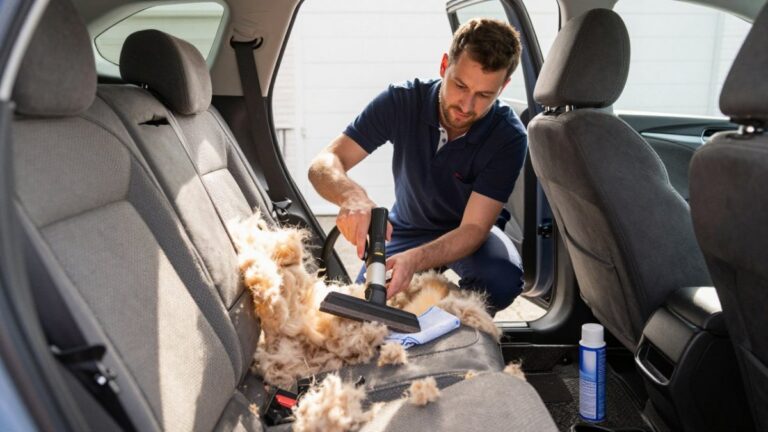
Doing a thorough clean before the inspection can help remove loose hair and may reduce the risk of a charge. For a practical DIY guide to cleaning and repairing car seats at home, see repairing car upholstery at home. Here is a practical order of work:
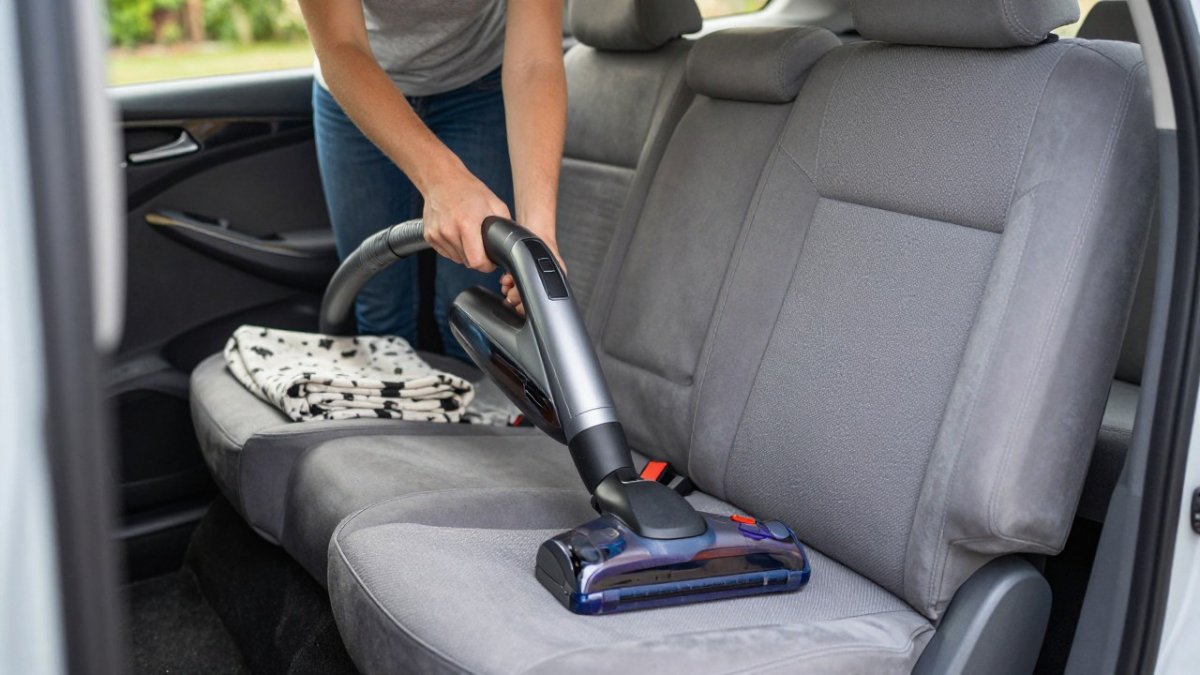
- Remove the floor mats and mats from the boot. Shake them out away from the car.
- Vacuum the seats first, using the upholstery brush attachment, working against the grain of the fabric.
- Use a rubber glove or a damp microfibre cloth to lift embedded hair. Wipe in one direction until the hair gathers.
- Vacuum again to pick up what you loosened.
- For odours, use an upholstery cleaner suited to your seat material, and let the seats air out with the windows open.
- Check the seams, the gap beside the seat and the headrests, where hair tends to collect.
- Photograph the cleaned seats in good daylight, showing both the fabric and any remaining marks.
Leather needs gentler treatment than cloth. Avoid harsh cleaners on leather, and test any product on a hidden patch first.
Lease Return Inspection Checklist for Pet Owners
Use this list the week before you return the car:
- Vacuum all seats, carpets and boot space, including under the seats
- Remove embedded hair with a glove or damp cloth
- Check for odours and treat them if needed
- Look for stains, scratches, tears and burns on seats, door cards and trim
- Take dated photos of the interior in daylight
- Gather the lease agreement and fair wear and tear guidelines
- Note any damage that was already present at the start of the lease
- Book a return inspection appointment if your lessor offers one
Disputing Lease-End Damage Charges Over Pet Hair and Odour
If you receive a charge you think is unfair, do not pay it straight away. The strongest challenges follow a fixed sequence: get the evidence, compare it to the standard, then escalate in writing.
Step 1, Request an itemised breakdown. Ask the lessor or landlord for a written list showing each item charged, the amount for each item, and the clause in your agreement that supports it. A lump-sum ‘cleaning’ charge with no breakdown is difficult for the other side to defend and easier for you to challenge. Keep the request in writing, by email where possible, so there is a dated record.
Step 2, Compare the charge to the applicable standard. For a vehicle lease, that is the lessor’s published fair wear and tear guidelines and the return inspection report. For a residential tenancy, it is the check-in report, the check-out report, and the tenancy agreement. Look specifically at whether the report describes loose hair, embedded hair, odour, or physical damage, because the category drives whether the charge is defensible.
Step 3, Assemble your own evidence. Dated photographs taken in daylight, before and after cleaning, are the single most useful item. Include close-ups of the seats, carpets, boot, and any area named in the charge. If the damage was already present at the start of the lease, point to the check-in report or your own handover photos. Keep receipts for any cleaning or repair you paid for yourself.
Step 4, Put the challenge in writing. State which charge you dispute, why you disagree, and attach the evidence. Refer to the specific clause or guideline you rely on. Ask for a response within a reasonable period, and keep copies of everything you send and receive.
Step 5, Escalate through the correct route. For a protected tenancy deposit, the dispute process offered by the deposit scheme holding the deposit is the usual next step (Tenancy deposit protection: Disputes and problems). Check which scheme holds your deposit and follow its published procedure. For a vehicle lease, escalate through the complaints process set out in your agreement and, where the lessor belongs to a recognised trade body or dispute scheme, through that route. If the matter remains unresolved, the relevant consumer body or a solicitor can advise on next steps.
Watch out: Do not let a dispute drag past the deadline in your agreement or scheme rules. Deposit dispute windows and lease complaint time limits can be strict, so check the deadlines that apply to your case.
Booking Mobile Interior Restoration Before Your Lease Ends
Some damage is beyond what a home clean can fix. Burns, deep tears and set-in stains can be expensive to put right if the lessor does it, so it can be worth dealing with them yourself beforehand. TrimKings offers mobile car interior repair across the West Midlands, working at your home or workplace, with repairs covering leather seat refinishing, cigarette burns, rips, scuffs and dashboard damage. To see mobile leather seat repair costs, check the pricing guide before requesting a quote. Pricing depends on the damage and the vehicle, so send a photo of the problem and request a no-obligation quote from TrimKings before your lease ends. You can also read about mobile interior repair that minimises schedule disruption.
Frequently Asked Questions
Does pet hair count as excessive wear and tear on a car lease?
Loose pet hair that vacuums away is usually treated as normal use, but hair that is embedded in fabric, matted into carpet or left in a way that needs professional cleaning can be charged. Lease terms and the lessor’s inspection standards vary, so check your agreement for wording on cleanliness and pets. Photographs taken at hand-back, and the condition noted at the start of the lease, are your best evidence if a charge is disputed. Where the interior needs deep cleaning or restoration to bring it back to the condition expected at hand-back, a charge may be justified.
Can a leasing company charge for pet odour when I return a leased car?
Yes, persistent odour from urine, vomit or general pet smell can lead to a charge, because it often requires specialist cleaning or treatment of the upholstery and underlay. A faint smell that airs out after a valet is less likely to be charged than a strong odour that stays in the seats. Ventilating the car and having it professionally cleaned before the inspection can prevent a dispute. Keep receipts for any cleaning you arrange, as they show the work you did.
Is pet hair normal wear and tear if it can be removed?
Hair that can be removed with a thorough vacuum and a rubber upholstery brush is generally considered ordinary use. Hair that is ground into fabric or carpet, or that needs more than standard cleaning to lift, may be treated as beyond fair wear and tear. The distinction is practical: if a standard clean restores the interior, the charge should be small or nil. If the interior still looks marked after reasonable cleaning, the lessor may argue the damage goes beyond normal use.
What should I do if I disagree with a lease-return damage charge?
Ask the lessor for an itemised breakdown of the charge and the inspection report, then compare it with your move-in or hand-over photographs and the condition report. Gather dated photos of the car after cleaning, receipts and any evidence that the damage was pre-existing. Put your objection in writing and state which items you dispute and why. If the matter is not resolved, consider an independent assessment or the dispute route set out in your agreement before you pay.